Category Archives: Destinations

Tales from Table Bay

We arrived in Cape Town, and the Cape Grace Hotel overlooking Cape Town Harbour and Table Bay, four days ago on Tuesday afternoon.

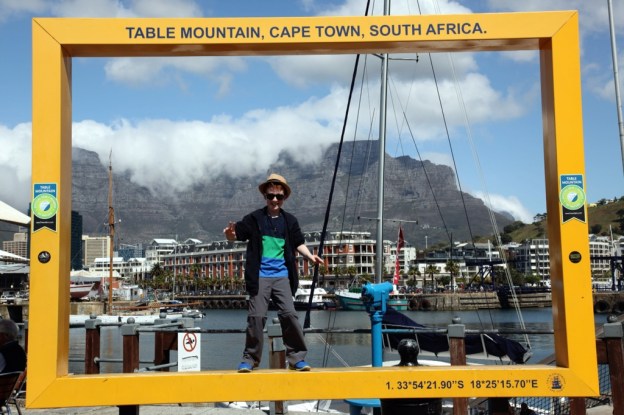
The Cape Grace Hotel sits amidst the V&A Waterfront; a collection of hotels, shopping precincts, galleries, handcraft markets, museums and other tourist attractions. On one side the view is beautiful waterfront. On the other side, majestic Table Mountain towers above us.


It has been a little hard to leave the hotel because Cape Grace is so beautiful and comfortable and all of the staff are extremely friendly, especially to Louisa (who they call “baby”) and Oliver. We are staying in a wonderful two bedroom apartment with lots of space for everyone.

But we have ventured out and we are in love (“thandi”) with Cape Town.

On Wednesday, after a quick visit to a doctor for Oliver (he picked up a rattly cough on the way over) we spent much of the day at the Two Oceans Aquarium. Quite like Sydney Aquarium but much cheaper, we enjoyed meeting African sea life from the Atlantic and Pacific Oceans, as well as some of their Australian cousins. Louisa especially enjoyed the touch pools and Oliver was keen to learn more about South African Black Footed Penguins, which have become endangered (down from 1.5 million in 1910 to mere thousands now left in the wild) due to human interference with their habitat.

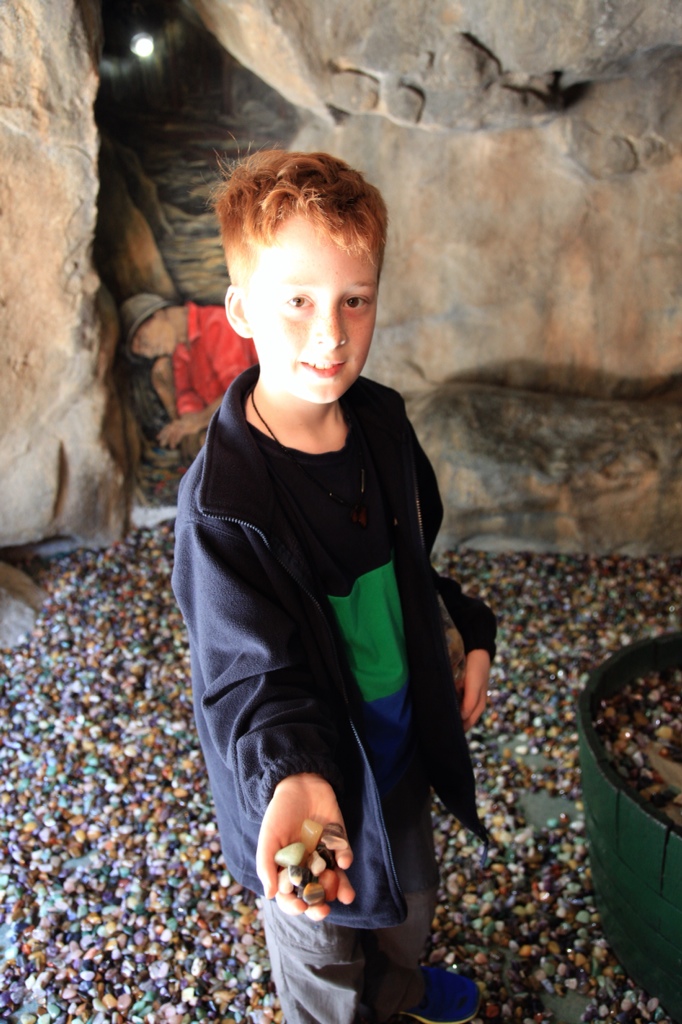
On Thursday morning we “discovered the magic of minerals” at Mineral World Scratch Patch. Almost half of the world’s gemstones are found in Southern Africa. At Scratch Patch you can hunt through thousands of polished gemstones, which cover the floor of a large cave, and fill a bag with your favourites. Oliver and Louisa loved hunting and then learning where their gemstones came from.
 

On Thursday afternoon we ventured out to Green Point Park, a beachfront area and series of playgrounds overlooking the West Coast of South Africa. First we visited the world’s 3rd largest maze and got completely lost on the way to the “magical fairy triangle” in the middle (in case you are wondering, the largest is the maze at Longleat in England; I asked). Next we played in a series of playgrounds, one with a small replica Blue Train that chugged around the perimeter of the park. Apparently it has been a feature of this park for at least 50 years. In many ways the landscape of Cape Town is similar to Sydney — especially with blue skies overhead, waves crashing on the shore, and a brisk onshore breeze — except for the ring of very large mountains.

The maze, the park, the ocean

On Thursday night, capping an extremely busy day, we went to dinner at Gold’s Cape Malay restaurant. The night started with an African drumming class. We first learned how to hold our drums. Next we learned how to make deep booming sounds in the middle of the drum or higher notes on the rim of the drum. Then in between three courses of authentic Cape Malay and African dishes we were treated to African singing and dancing. Oliver and Louisa had their faces decorated with traditional designs and at one point Oliver was invited up to dance. He more than held his own!

Drumming lesson at Gold’s

Dancing at Gold’s

On Friday we hired a car and driver to take us further afield, south of Cape Town down the Cape Penninsula. The scenery on this drive was spectacular. Towering mountains. Crystal blue ocean. White sandy beaches. Lush green fields.

Our first stop for the day was at Mariner’s Wharf in Hout Bay where we boarded a boat for a 40 minute round trip to Seal Island. Huge seals swim in and out of the Harbour, as well as laze on their rocky outcrop. We saw one local man feed a large seal by putting a fish in his mouth, which the seal jumped out of the water to grab. Risky! But worth the 5 Rand he asked in payment. He said: “I use the money to buy more fish. We feed the seals, the seals feed us!”

Seals at Hout Bay

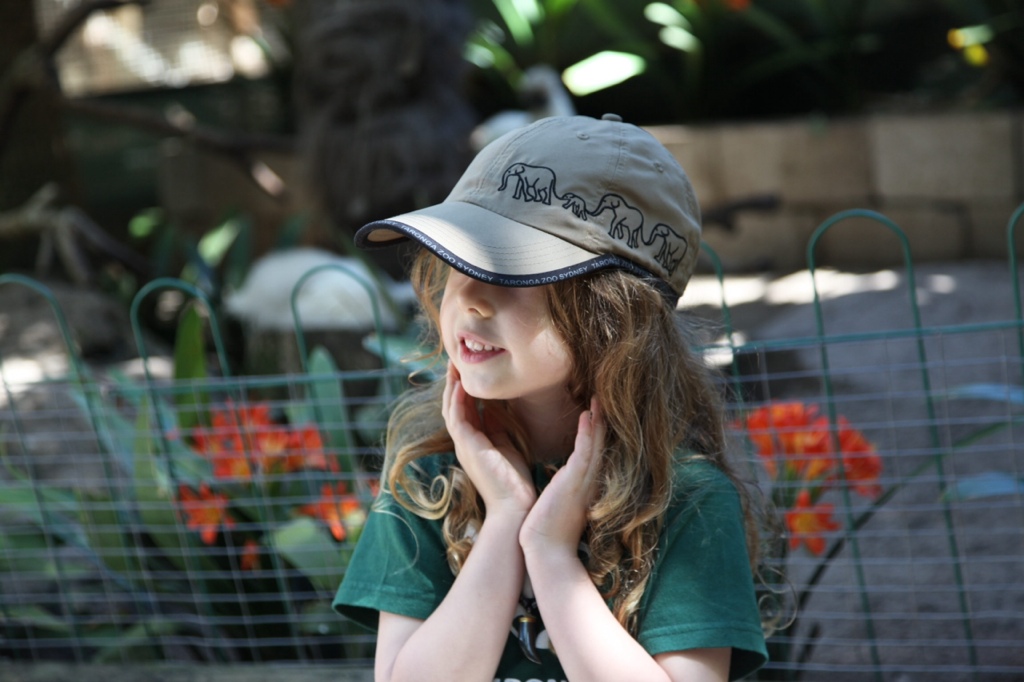
Our second stop was World of Birds Wildlife Sanctuary and Monkey Park, nearby. We posted separately about this stop because we saw so many amazing birds and animals, including Oliver and Louisa’s favourites: penguins and monkeys.
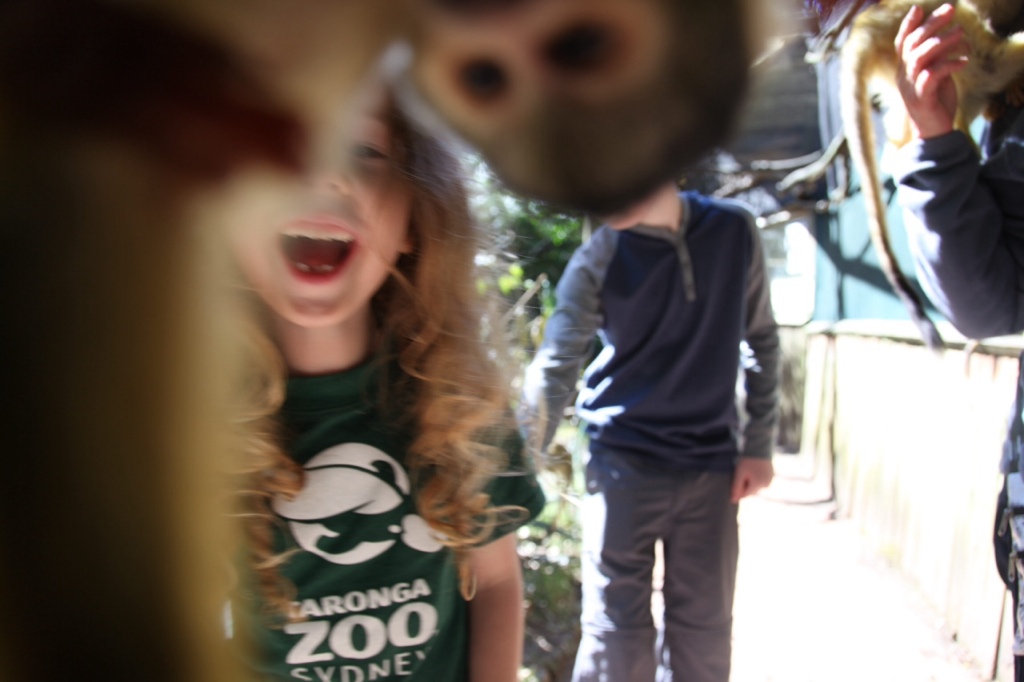
A Squirrel Monkey checking out Peter’s camera

After lunching on a picnic packed for us by the hotel, we continued further south, climbing high up to Chapman’s Peak. Named for a Dutch sailor who was mistakenly left behind when his crew stopped for water (before South Africa was first settled by the Dutch; apparently they sailed back hours later to find him ashen faced and surrounded by menacing wild animals), the Peak overlooks Chapman’s Bay. We saw three whales frolicking in the crystal clear waters just off the sandy beach.

Next we crossed south west to Simon’s Town, a former Royal Naval Base and home of the South Atlantic Squadron under British occupation in the early 19th century, and on to a large African Penguin colony at The Boulders. Boulders is nestled between Simon’s Town and Cape Point and home to around 2,200 penguins who swim and waddle around Foxy Beach, metres from boardwalks where we watched and took photos.
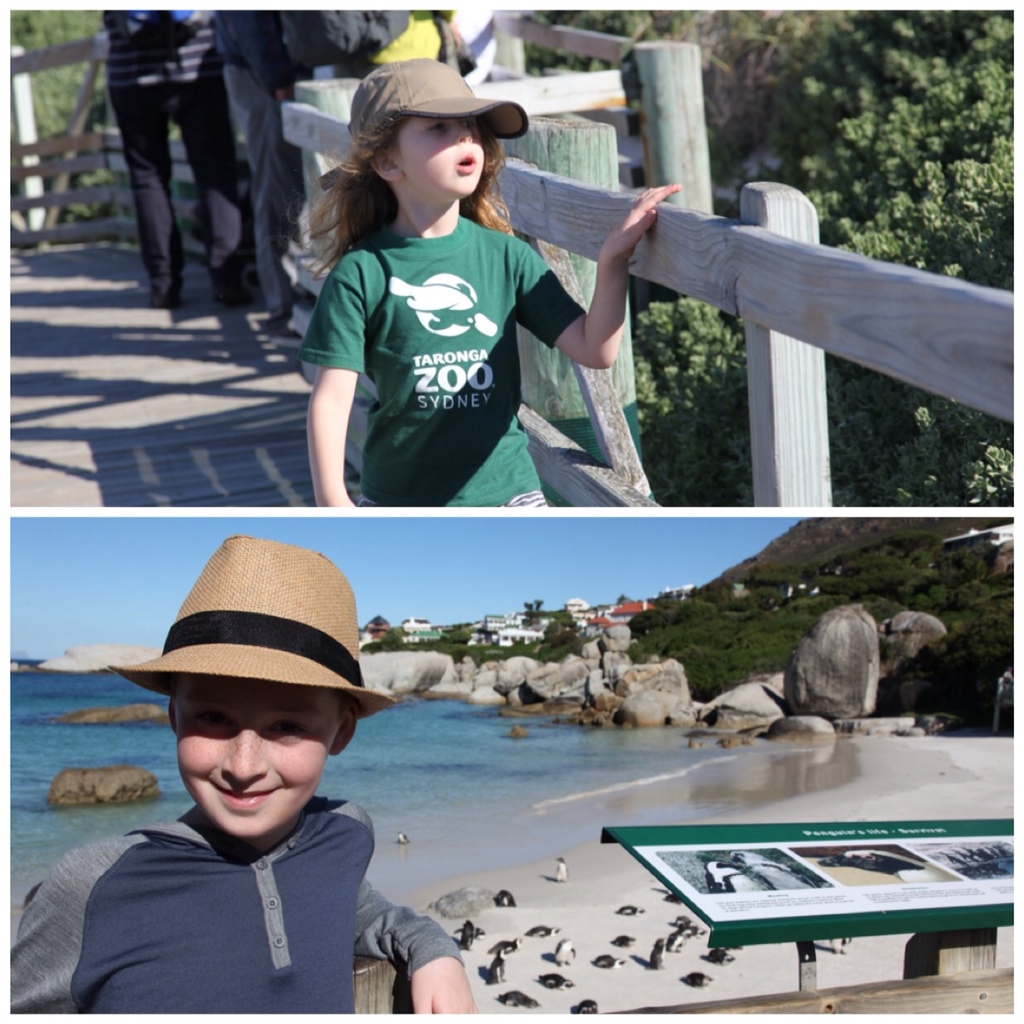
Penguin colony at The Bolders

Penguin Colony at the Boulders

By the end of the day, three busy days, we were exhausted and ready for dinner in our room and an early night. Today, our last full day in Cape Town before flying to Tswalu, we visited a Farmers Market in an old biscuit factory, toured a chocolate factory, and caught the cable car up to the top of Table Mountain.

Cable Car to Table Mountain


There certainly were parts of Cape Town and the Penninsula that I would have liked to explore a great deal more, such as Simon’s Town, which looked like a quaint English town. And the V&A Waterfront. But travelling with children means compromising and finding child friendly activities. Louisa especially has little patience with sightseeing and prefers active outings, particularly if they include animals. Hopefully when we arrive in Tswalu tomorrow she will have action and animals to her heart’s content!
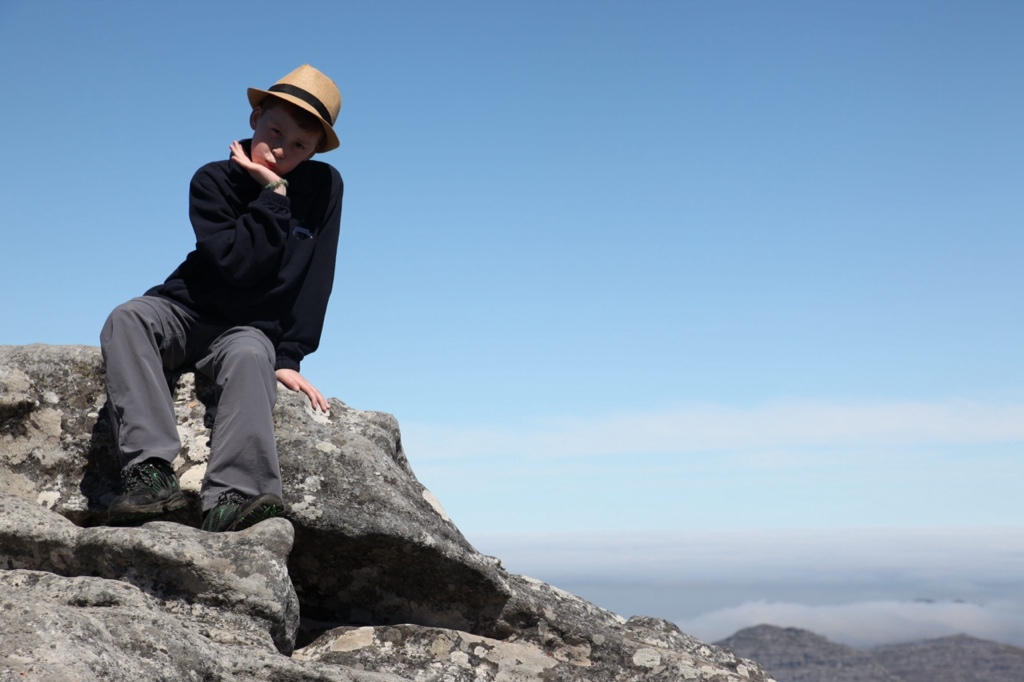
 

Cheerio!


A letter to you from Africa

“It is good to have an end to journey towards; but it is the journey that matters, in the end.” Ernest Hemingway (thanks to Oliver’s teacher, Mrs Taylor, 3/4T at Boronia Park Public School, Sydney, for the quote).

Looking along the corridors of The Blue Train

You said that you like me writing to you, so here’s a letter from the heart of South Africa …

I am sitting in the dark on a train travelling from Pretoria to Cape Town. We started our journey this morning in Gauteng Province and headed south to Johannesburg and then to Soweto.

Welcome to The Blue Train

Peter boarding The Blue Train

Turning south west, we skirted the edges of three provinces as we travelled diagonally across country: North West Province, Free State Province, and Northern Cape Province. Almost right in the middle of South Africa we stopped in the town of Kimberley, home to the De Beers Diamond Company and their vast open pit diamond mine, “The Big Hole” (read Oliver’s separate post on his excursion into Kimberley here). Tonight, in the dark, we are racing towards Western Cape Province and Cape Town, at the southern tip of the African continent.

The train is making those rackety and whistle sounds that remind me of trains in movies. Perhaps the sounds of the train that carried Lara across Russia in Dr Zhivago? Or perhaps the sounds of the train at the start of a Phryne Fisher mystery?

Our cabin has been turned into a bedroom and Louisa is fast asleep in the fold down bed. I am sitting looking out of the big picture window in our cabin at the landscape rushing by. There’s a full moon high above us but I can’t make out any familiar constellations in the Southern Sky. There are few towns and only a smattering of lights from isolated farm houses. Mostly it is just moon lit black with vague shapes suggesting geology, vegetation, and the occasional man made object: road or railway siding.

The Blue Train certainly is a luxurious experience. Riding in beautifully appointed sleeper cabins with Italian marble bathrooms; calling the ever patient and gracious butlers to cater to Louisa’s whims; lounging in the elegant surroundings of the Cafe car; and dressing in formal wear for four course meals in the Dining Car.

Cabin 23 on The Blue Train

Our Butler, Frank Mathosi

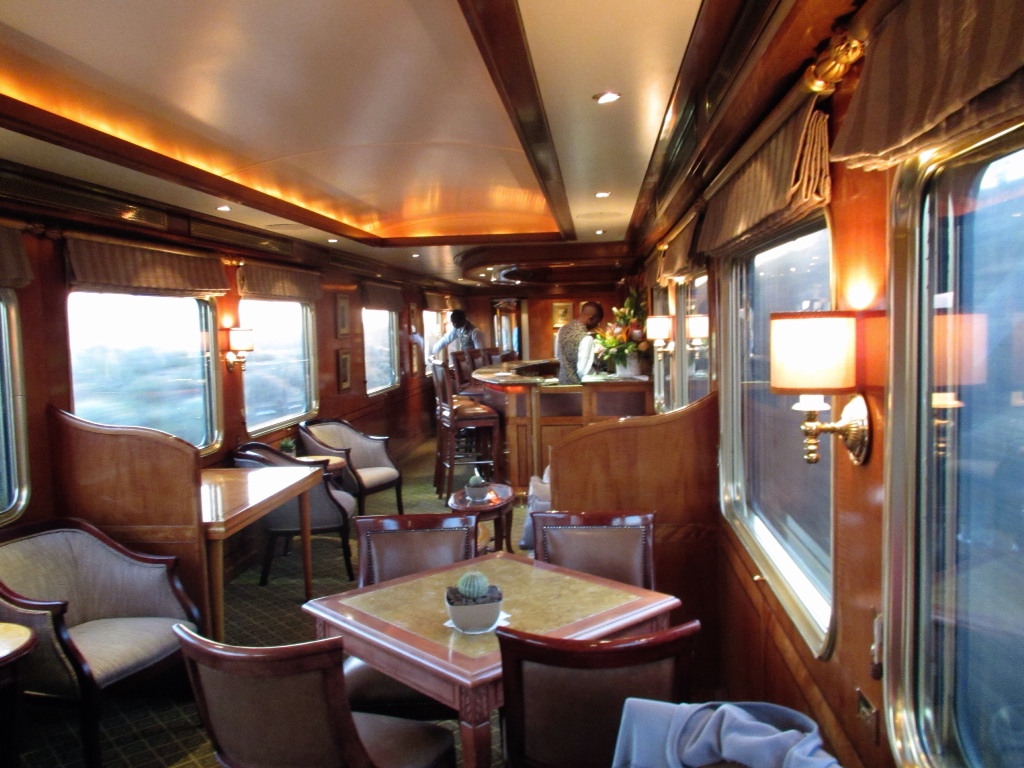
The Cafe Car aboard The Blue Train

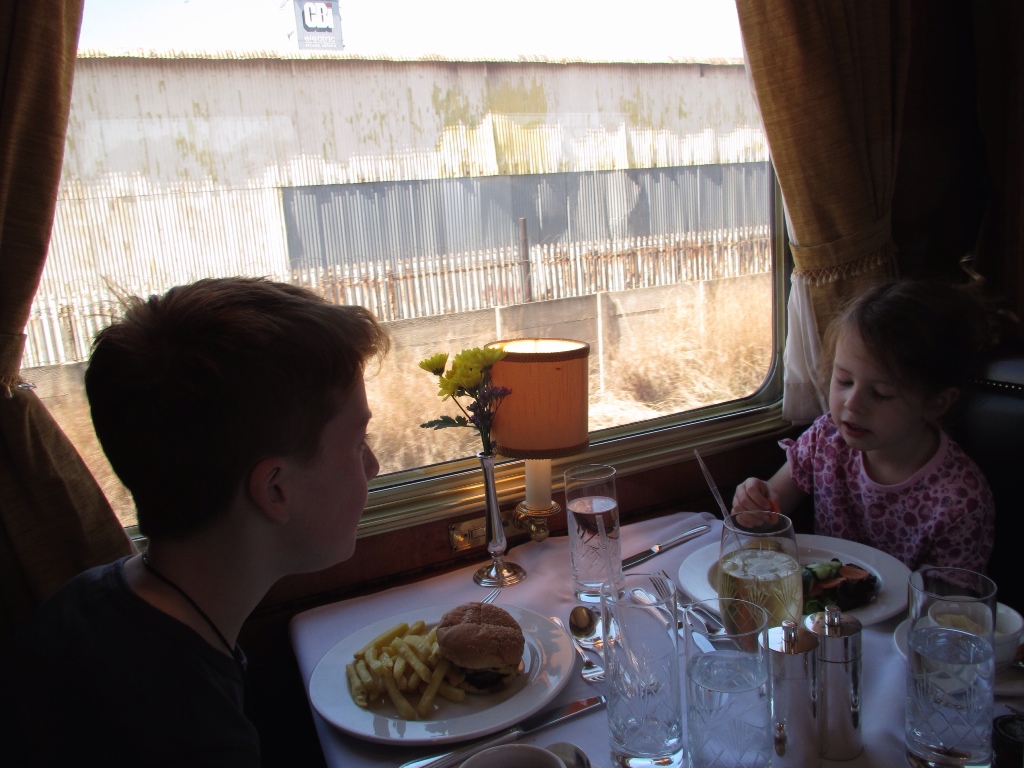
Lunch in the Dining Car

But I must admit that it is a somewhat incongruous experience to be looking out from all this luxe and privilege to a country full of day to day hardships. We passed many shanty towns with tiny dwellings made of tin or wood, sitting in harsh, polluted environments. I am not sure what I was expecting: wild animals running photogenically alongside the train? Huge viaducts spanning deep gorges (of the kind I travelled on at the end of the Otago Rail Trail in New Zealand last year)? Maybe these are to come? But so far The Blue Train has lived up to its reputation as the “window to the soul of South Africa”.

Out of this window we can see the real South Africa, in all its beauty, vastness, contrasts and inequalities.

Later …

Overnight, lying beside Louisa, I thought I heard animals howling outside. Perhaps howling at the full moon?

Louisa and I have been awake since just after 5am looking out of our picture window, waiting for sunrise. I think I can see the Southern Cross low in the early morning sky.


As the sun rose, and we moved to the Cafe Car to wait for breakfast, the scenery outside changed entirely. The flat dry plains of yesterday have given way to mountain ranges and fertile green pastures. Early this morning the landscape was empty of settlements; just a few trucks tooling along nearby roads. Now we are passing scattered farm houses and a few small towns. Certainly no large towns or cities and fewer Township settlements. So perhaps less confronting in its majesty today?

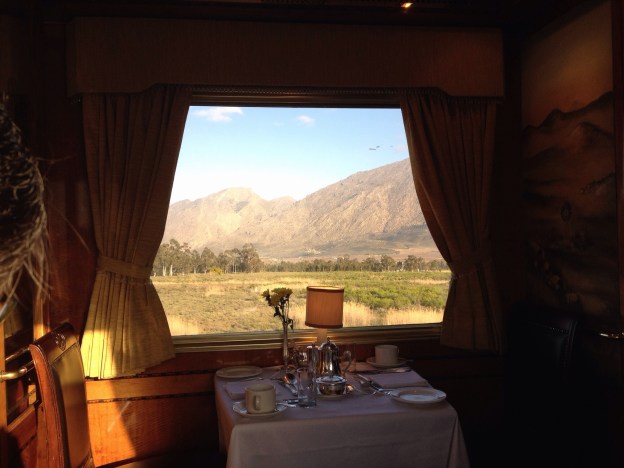
The view from our window yesterday

The view from our window this morning

And I guess that is the value of this journey. When we booked and boarded The Blue Train we probably thought that the journey worth having, to paraphrase Hemingway, was a journey to spoil ourselves a little as we traversed the country. But because the train windows reveal everything and hide nothing, the journey we’ve ended up with hopefully also is one of reflection. A chance to reflect on how fortunate we are in our lives. And fortunate to live in Australia. Australia and South Africa seem somewhat similar in their vast, sometimes inhospitable, landscapes. Are we similar also in entrenched or deepening inequalities? I would like to think not but then we haven’t been on a 28 hour train ride right across Australia! What would we see out the window then?


Soon we will arrive in Cape Town where another face of South Africa no doubt awaits us.

See you soon.

Amanda x


Speedsters of the veldt

This morning, day 2 of our African adventure, we drove from Maropeng to the Ann van Dyk Cheetah Centre in De Wildt.

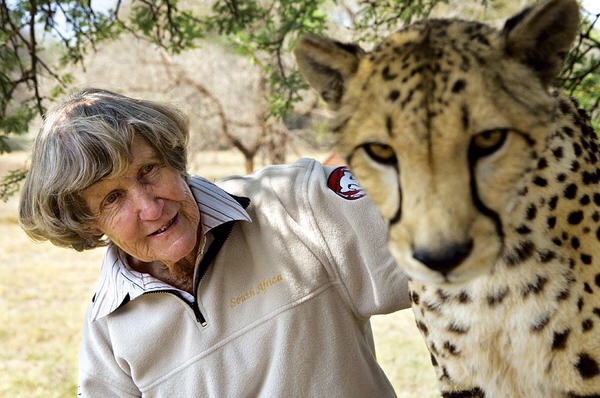
Ann van Dyk established her Centre in 1971 during a period when farmers, who feared Cheetahs and resented heavy stock losses from Cheetah predation, were hunting them towards extinction. van Dyk established a breeding centre to secure the long term survival of Cheetahs as well as other wild animals such as the African Wild Dog. Over the years, the staff of the Cheetah Centre have worked hard also on outreach activities to educate and involve farmers in managing Cheetahs in the wild. And van Dyk and her team are educating the next generation of South Africans to love and respect Cheetahs and other wild animals. They believe:

“We will conserve only what we love. We will love only what we understand. We will understand only what we are taught.”

Ann van Dyk

We arrived at the Centre and first read this sign:


Mildly nervous, we signed waiver forms and joined our guide. She explained that the Cheetah Centre is home to 60 Cheetahs and 50 African Wild Dogs, some from the wild and some hand raised at the Centre, as well as many other wild animals such as Cape Griffon Vultures.

Cape Griffin Vultures are one of the most endangered animals in all of Africa. This is because they are a highly prized hunting target for Africans who believe that if they eat the eyes of the Vulture and sleep with its head then they will be able to predict the future. This is because Vultures fly so high; above the clouds and able to see far ahead.


Our first stop on the tour was to see two Honey Badgers. These cute fluffy little guys apparently are the most dangerous creatures in the park! Lions are afraid of them because they are fearless, vicious fighters with long sharp claws, which they use to rip the soft under bellies of Lions and Cheetahs. Their favourite food is live snake! This is the one animal in the Cheetah Centre where the Keepers will not enter their enclosures. We also learned that young Cheetahs’ colouring mimics that of Honey Badgers, which keeps Lions away. What an amazing example of evolutionary adaptation!


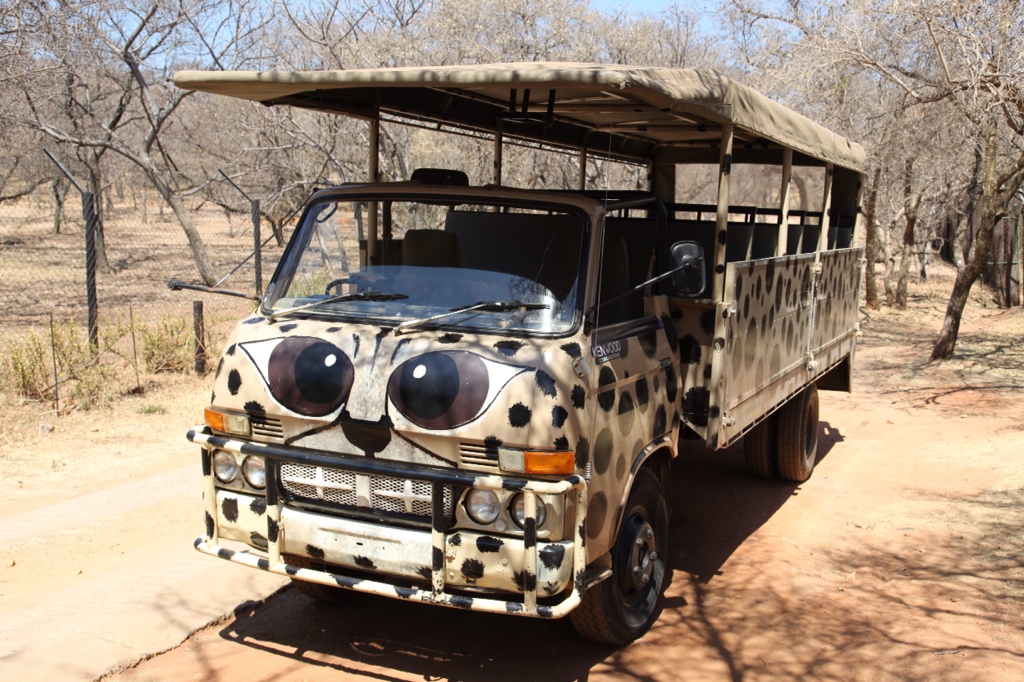
Next we climbed into a safari bus for an extremely bumpy ride up into the hills surrounding the Cheetah Centre, past many enclosures with Cheetahs, African Wild Dogs and other animals.


First we saw beautiful Cheetahs that prowled up and down the fence waiting for large chunks of meat that the Ranger threw over the fence. The pattern of spots on each individual Cheetah is different from all others; like human fingerprints! Nevertheless, the general patterning of these spots is inherited from their parents, including the elusive King Cheetah pattern. This distinctive dark striped pattern once was thought to represent a separate species but is now known to be the result of a rare mutation within Cheetahs. The De Wildt Centre helped to solve this mystery when it bred two litters of Cheetah cubs, each with one King Cheetah cub.


Next we saw many groups of African Wild Dogs, who live in packs. They are under threat in the wild but thriving at the Cheetah Centre. Cubs bred at the Cente are released back into the wild. Our Ranger told us that whereas wild dogs are quite wary of humans, hand reared animals are extremely dangerous to the Keepers. This is because in the wild, dog packs are organised hierarchically. African Wild Dogs fight their way to the top by biting other dogs. So if they think you are in their pack, as they view the Keepers who rear them, they will bite you to assert dominance!

We saw two litters of pups with their Mum and Dad. These pups below are about 16 weeks old. They are greedy, noisy, impolite eaters!


We also saw sweet, little Meerkats. Oliver and I saw a large group of Meerkats at London Zoo when we visited June 2013. We also expect to see more when we fly to Tswalu and the Kalahari Desert.

IMG_0740.JPG

It was amazing to get up so close to these beautiful animals. But not too close! One of the Cheetahs sized us up from behind his fence and growled a very menacing growl at us. Beautiful but happily separated by a fence!


Tomorrow we board The Blue Train for our journey across South Africa from Pretoria to the Cape.


Maropeng, “welcome home”

We flew into Johannesburg, South Africa, last Friday night and drove around the outskirts of the city to our first night’s accommodation at the Maropeng Hotel, within the Cradle of Humankind World Heritage Site. As we drove, we passed a city of immense contrasts: the homes and cars of wealthy South Africans. And the crowded, extremely basic conditions of South Africans who live in Townships. Our guide Liese told us that entire families live in a space probably no bigger than Oliver’s bedroom.

Maropeng is the centre of the Cradle of Humankind World Heritage Site. From their website:

“The 47 000-hectare site has unearthed the best evidence of the complex journey which our species has taken to make us what we are – a place of pilgrimage for all humankind. It is not only a place of ongoing scientific discovery into our origins, but also a place of contemplation – a place that allows us to reflect on who we are, where we come from and where we are going to.”

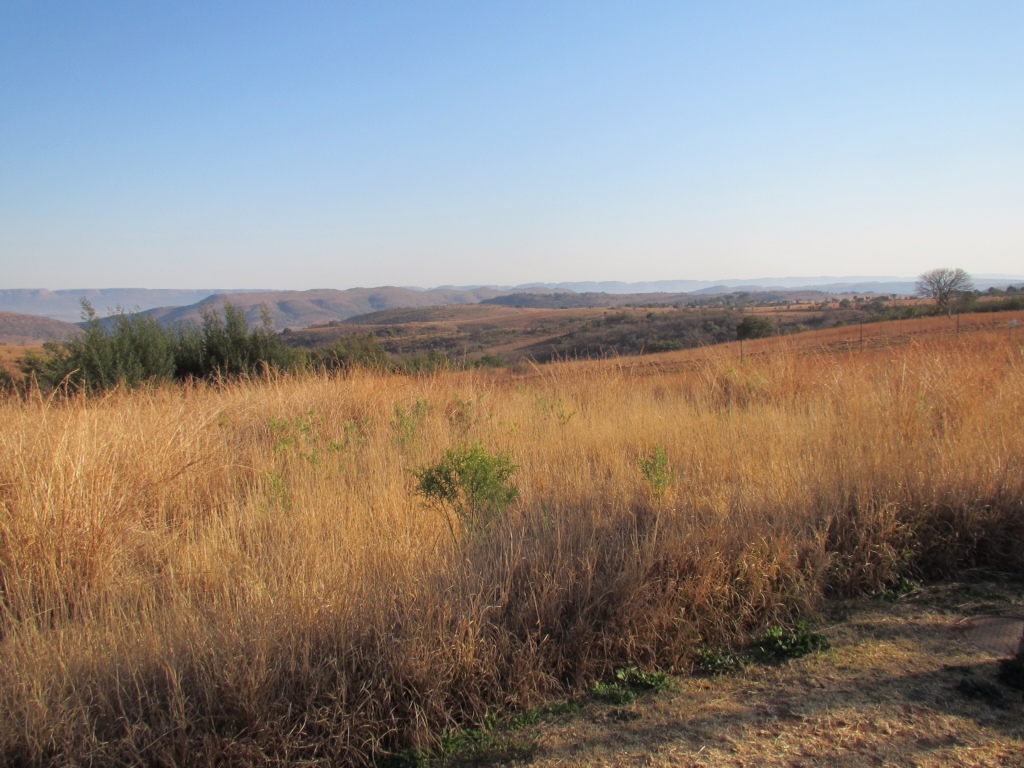
We woke very early on Saturday and waited for sunrise looking across the veldt towards mountain ranges in the distance. Not far from our door, Blesbok Antelopes grazed and wandered.


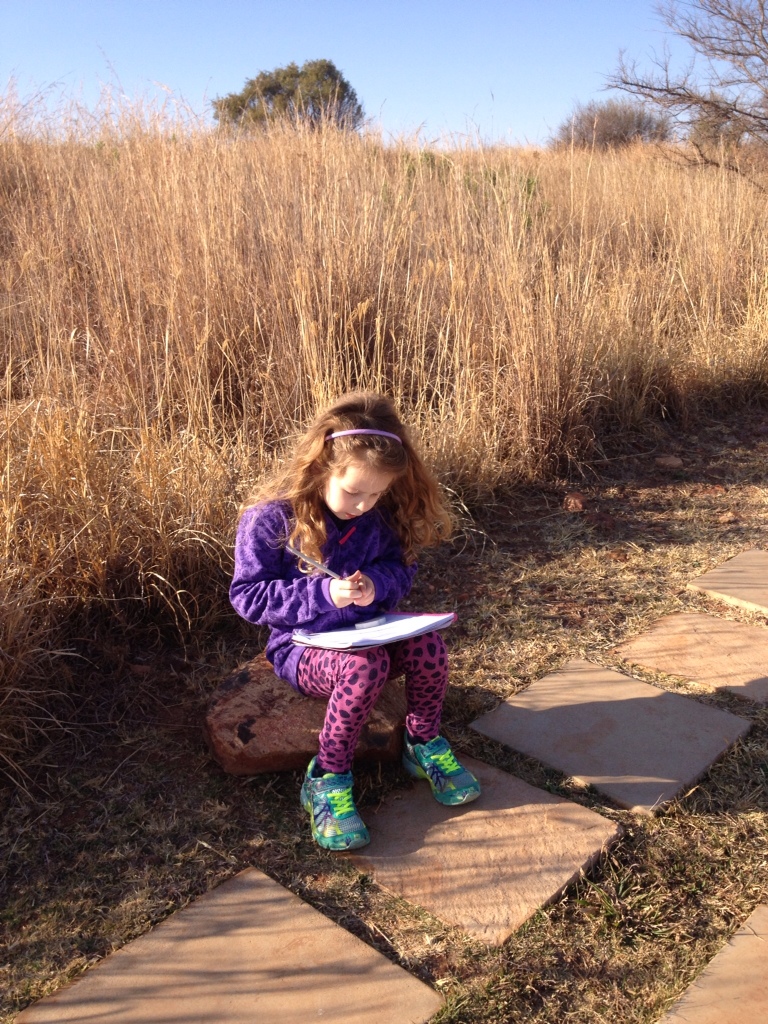
Over a delicious breakfast of fresh fruit, juice, pastries, meats and cheeses Louisa started a diary to record all the things she is learning about Africa. She remembered that last night our guide told us that there are at least 8 official languages in South Africa. As we explored throughout the morning Louisa stopped often to record thoughts and observations in her diary such as:

“I love Africa. I want to live in Africa. Africa has lots of rocks.”


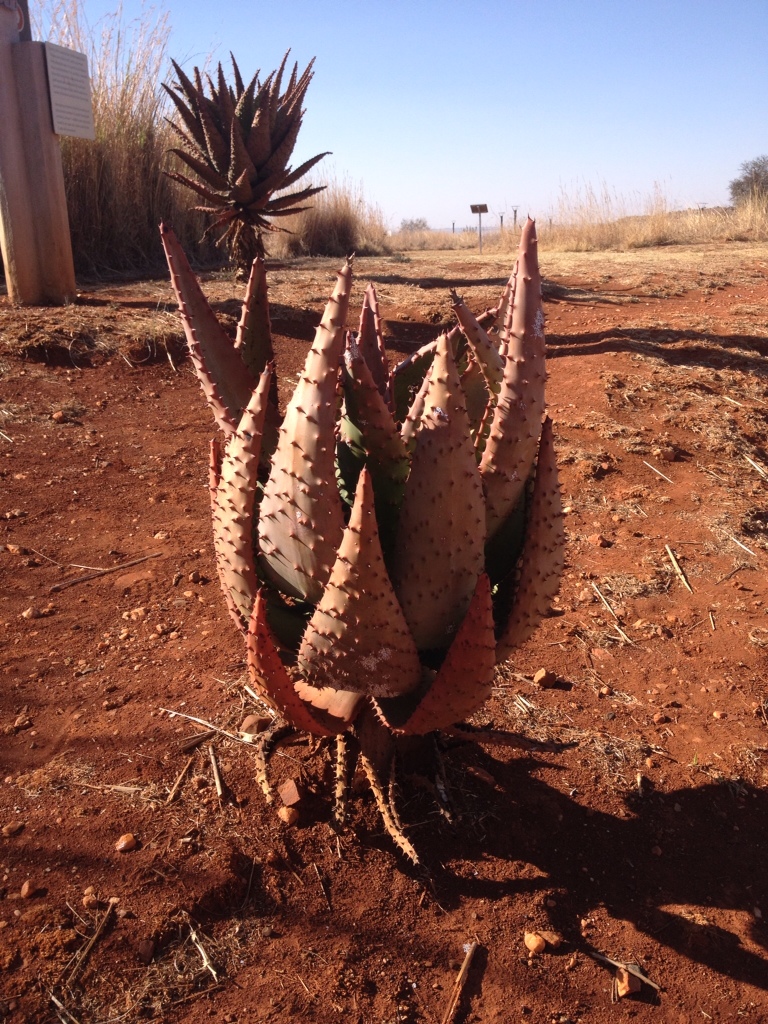
At first, from our balcony, the mountain ranges in the distance looked a little like the Blue Mountains, which lie west of Sydney. And yesterday the road to Maropeng reminded us of the road between Canberra and Jindabyne in southern New South Wales. But on foot, our surroundings looked entirely distinct. With red, red earth, enormous prickly cactuses (Aloes) like something out of John Wyndham’s imagination, and warnings of snakes just off the path.


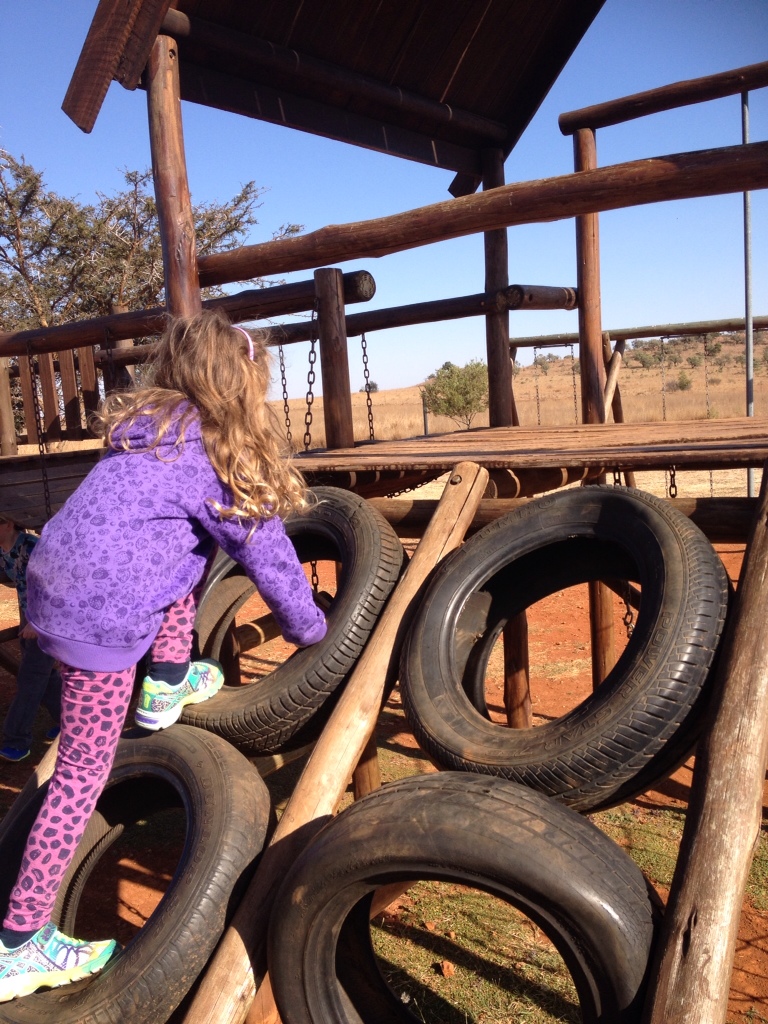
Soon we came across something completely mundane yet beautiful amidst the glorious African landscape. A playground. This playground included equipment you had to navigate on all fours, just like our very distant ancestors, as well as equipment you had to navigate upright. Just like our nearer ancestors. The playground was part of the Maropeng Visitor Centre.


The Maropeng Visitor Centre is a museum/exhibition that focuses on the development of humans and our ancestors over the past few million years. It is housed inside and underneath a massive burial mound called the Tumulus.


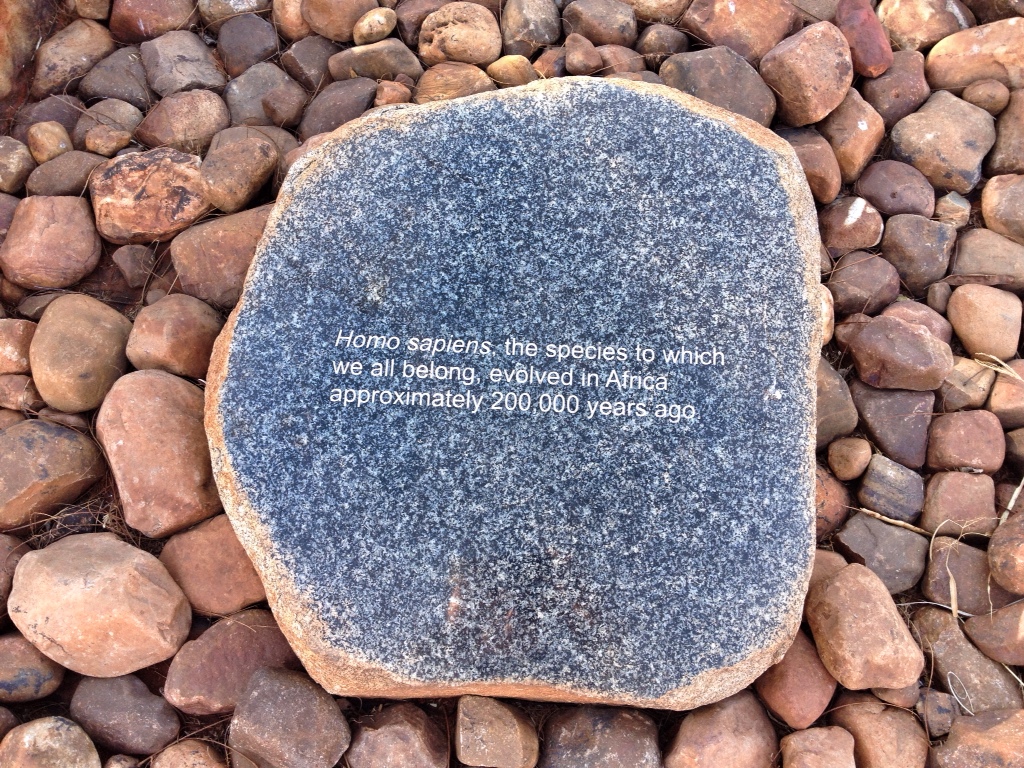
The idea that all humans originated in Africa was first proposed by Charles Darwin, who introduced the theory of evolution (together with Alfred Russell Wallace), in his book “The Descent of Man”. This view was controversial for a long time. Many other scientists believed that the “cradle of humankind” would be found in Europe and Asia. But the fossil record for an “Out of Africa” hypothesis proved compelling and was finally confirmed by DNA evidence in the 1980s.

Maropeng and surrounding sites are home to the oldest hominid fossils as well as fossil remains of our nearest ancestors. The Maropeng Visitor Centre tells the story of evolution, explains the timeline of and controversies around the discovery of hominid fossils in this area, and argues that Africa (and this area in Eastern South Africa) is the birthplace of humankind. Thus, we were greeted by “welcome home” when we arrived at the Maropeng Hotel on Friday night.


An Australian anthropologist, Professor Raymond Dart, was central to this story. We learned from the exhibition that:


Dart published his controversial conclusions about Australopithecus africanus in a 1925 paper in the journal Nature, which you can read here.

Professor Raymond Dart and the Tuang Skull

On Saturday night, after a busy day exploring Maropeng, Oliver and Louisa were falling asleep at the dinner table. The jetlag hit them hard; dinner time here, 6pm, is 2am Sydney time. But they slept well and long Saturday night, and woke ready on Sunday for Day 2 of our African adventure! A cheetah park, a monkey park, and preparing to board The Blue Train early Monday morning …


More soon!


The day before the day before we leave: Packing

Peter and I are packing for ourselves and the kids — Oliver and Louisa — before we fly to Africa in less than 36 hours. We realised today, as we debated which bags to pack what into, that we have an awful lot of luggage lying around our house. Peter has the original backpack he took on his first journey around Africa more than 20 years ago, as well as the backpack from his 18 month sailing voyage from Sydney to Europe via South East Asia and the King’s Cup in Thailand, across the Indian Ocean and up the Red Sea to the Sailing World Cup in Cyprus. And I have luggage galore from an academic career of conferencing and lab visits around the world, not to mention an ongoing love affair with Crumpler and Rushfaster, among other luggage and travel specialists (Magellan’s, Flight 001, Ciao Bella Travel …).

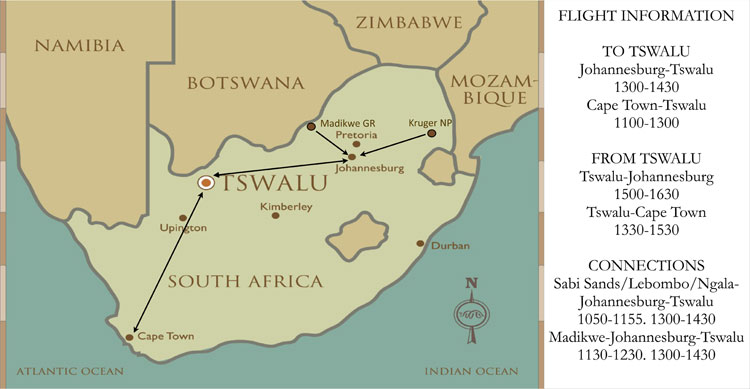
Our packing task this trip has a slightly higher degree of difficulty because although we each can take 40 kilograms of checked luggage and 7 kgs of hand luggage onto our international flights, we only are allowed 12 kgs of checked luggage and 6 kgs of hand luggage each on the small private plane that will take us 850 kilometres north from Cape Town to the game reserve, Tswalu Kalahari.

We also need to bring formal(ish) wear for dinner on The Blue Train, which will take us from Johannesburg to Cape Town on one of the first legs of our journey. And Tswalu is almost the last leg of our journey after 5 days in Cape Town. So where and how to pack any souvenirs we might like to buy?

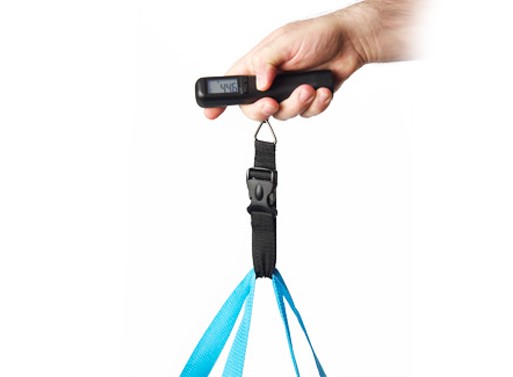
So here’s our first crucial piece of packing equipment: a portable digital travel scale. I picked mine up in Flight 001 in San Francisco, but you can buy similar versions very easily. For around $20 you can keep under those weight limits.

timthumb

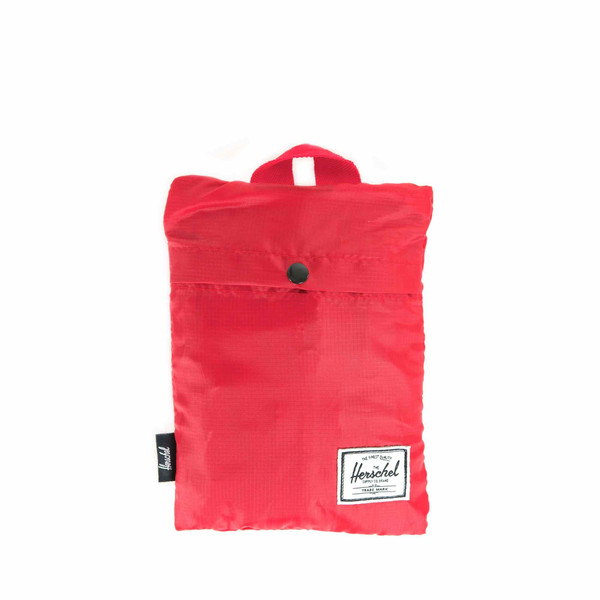
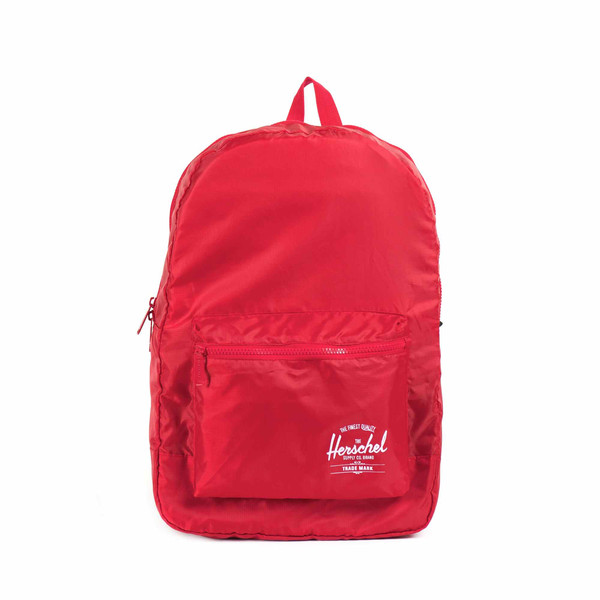
I also really love Herschel Packable Luggage. I have a backpack, again from Flight 001, which transforms from a small little soft parcel that is easily stashed in your bag into a good sized, light weight backpack. I use it when I hire a bike during a conference trip or when out and about for the day.

10076-00184-OS_08_grande

10076-00184-OS_01_grande

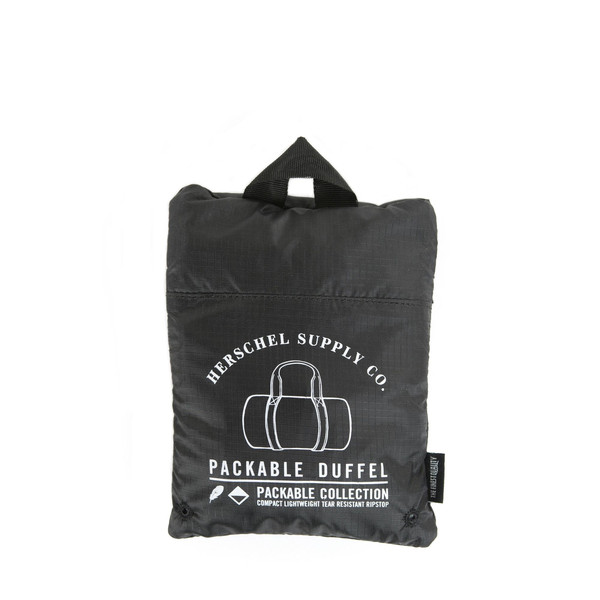
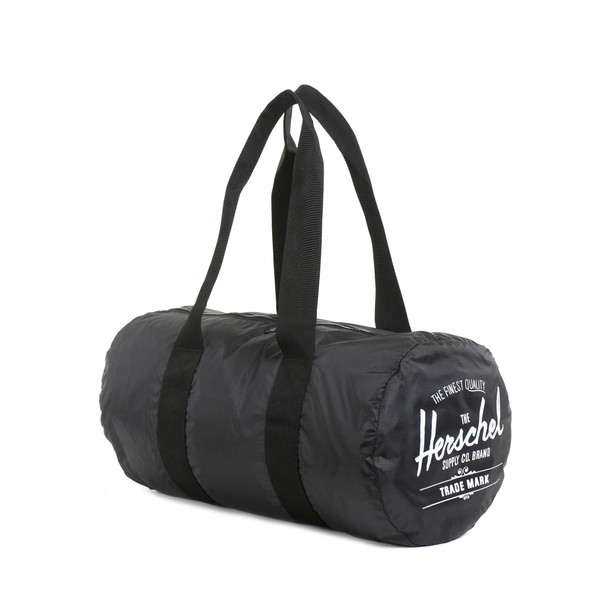
For this trip and for Father’s Day, the kids gave Peter a packable version of Herschel’s duffle bag:

10078-00003-OS_06_9d81c81c-553b-4dc5-bd95-4ff4d74d2e5a_grande

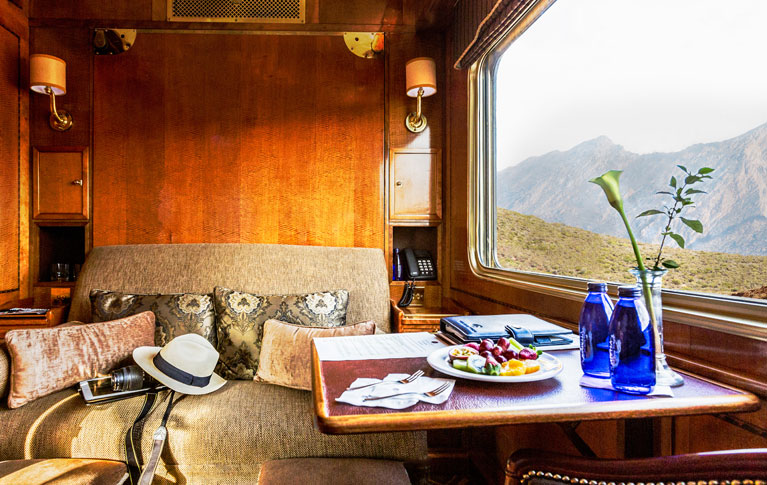
10078-00003-OS_02_0503e114-8135-4a8d-bb99-3b760d2ba317_grandeThis will be perfect for when we need to decant some of our luggage for The Blue Train trip. Our sweet little sleeper cabins (perfectly formed but limited space) can’t fit all of our luggage, so we need to separate what we need for the train journey from everything else, which will be stored in a luggage hold.

luxury-suites-1

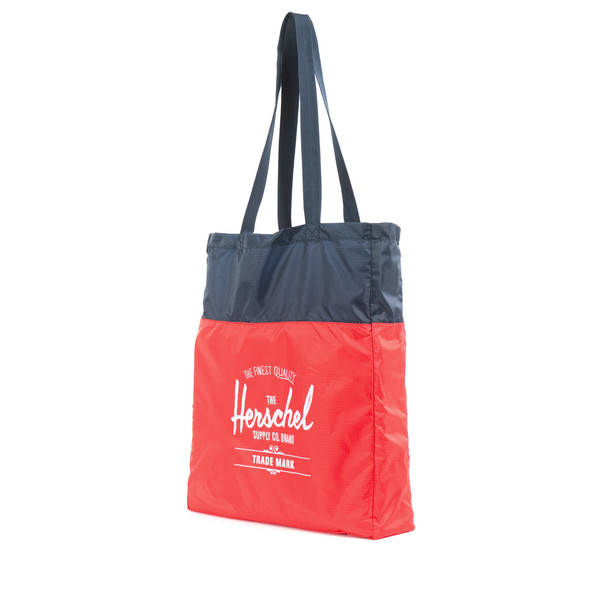
Herschel Packables also include a messenger bag and a tote. I often buy a cheap tote bag from the airport book store to carry my overflow water bottles, coat, magazines etc, but Herschel’s likely would be more long lasting.

10077-00009-OS_02_39d80cbc-7682-417c-8f71-72ded5696950_grande

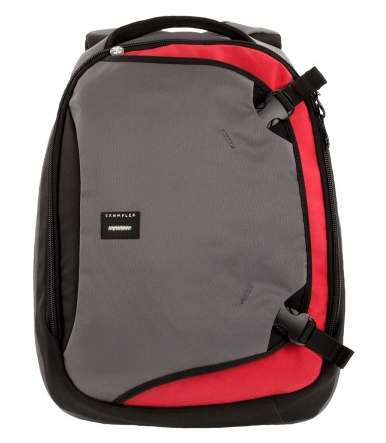
My final go to bag when packing is my Crumpler Dry Red No 5 backpack. I have blogged about this before and have been singing the praises of this bag far and wide. Recently I purchased two of these bags in black for our memory research team, so they can transport our electronic and audio equipment back and forth from Sydney to Melbourne. This carry on bag safely stores my laptop, iPad, kindle, a change of clothes, wallet, some toiletries, paperwork and other odds and ends.

I adore Crumpler bags and have far too many or not enough. This is one of my favourites:

Crumpler Dry Red No 5 Backpack

Crumpler Dry Red No 5 Backpack

So back to the packing. The only other challenge we face is that Peter and I both are reasonably seasoned travellers; at least for work travel. So we each have our own preferred luggage, methods of packing, tricks and lists. Yes, so back to the packing and the negotiations. Next stop: the airport.


Towards African skies

…His path was marked

By the stars in the Southern Hemisphere

And he walked the length of his days

Under African skies.


In February this year I posted about a planned trip to South Africa in May 2014. Although Peter went ahead with his conference travel, our family holiday was postponed due to my work commitments. So now we leave for Johannesburg and the start of our 17 day African adventure in exactly 2 weeks.

We fly out of Sydney Friday morning and arrive in Johannesburg Friday evening. We then travel to Maropeng, home of the Cradle of Humankind: birthplace of humanity. “Maropeng” means “returning to the place of origin” and we will be able to tour the Sterkfontein caves where scientists have discovered almost complete Australopithecus skeletons dating back more than 3-million years.

From Maropeng we return to Pretoria to board the historic Blue Train and start a 28 hour journey to Cape Town through the heart of South Africa. From their website:

As time meandered from the 19th Century towards the dawn of the new era, a dream was born. A dream of harnessing steam technology to link Africa’s vast south to north, around the awe-inspiring mountain ranges that dot the continent, through the apparently arid desert landscapes, over untamed savannah grasslands teeming with wildlife. From the Cape all the way to Cairo… all of this on parallel lines of tempered steel.

It is from this dream that The Blue Train was born. Cairo was never to be, but the dreamers persevered and The Blue Train now traverses South Africa and its breath-taking scenery in a manner that befits the mystique that has grown around it.

Welcome aboard The Blue Train. Your unforgettable experience is about to begin…

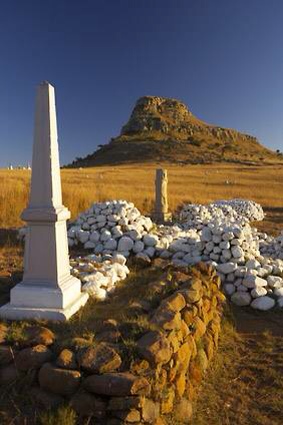
Louisa is looking forward to seeing the wildlife, African playgrounds, and the white rocks (white stone cairns that mark the graves of British soldiers who fell during the 1879 Anglo-Zulu war, which she saw in a picture in one of our guidebooks). Most of all she is looking forward to seeing African Hunting Dogs (her namesake!).


So onwards to African skies. More updates soon …


oliver&amanda&louisa&peterinafrica

I am reviving this blog a second time to document a new adventure. In May this year, my husband (and Oliver’s dad), Peter, is attending a conference in Pretoria, South Africa. Peter backpacked through Africa in the early 90s, although not South Africa, which still was in the grip of apartheid and under sanction. He started in Harare, the capital of Zimbabwe, africalargemapand travelled through Botswana, Zambia, Malawi, Tanzania, Zanzibar, Kenya, Uganda, Rwanda, the Democratic Republic of the Congo and Burundi. He was on the road for 6 months. I will ask him to post some pictures and memories to the blog at a later date.

Peter is keen for the whole family to travel to South Africa and join in a safari adventure.

Peter will fly first and then Oliver (9), Louisa (5) and I will fly a few days later to meet him. We will fly from Sydney to Johannesburg and drive to Pretoria. Pretoria is one of three capital cities in South Africa.  Interestingly, South Africa has separate capital cities dedicated to the executive (Pretoria), the legislature (Cape Town), and the judiciary (Bloemfontein). So perhaps somewhat like Canberra?

While waiting for Peter to finish his conference commitments and for the first of three legs of our trip to start, we hope to visit a cheetah research and breeding centre as well as the “Cradle of Humankind” World Heritage Site, where it is claimed humans originated from.

elegant-lounges-21

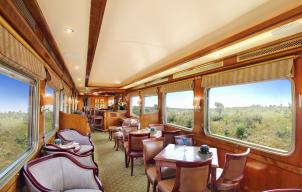
On board the Blue Train

A few days later we plan to travel on The Blue Train from Pretoria to Cape Town: a 27 hour, 1,600 kilometre journey through the heart of South Africa. The Blue Train was part of a plan in the 19th century to build a train line for steam engines from Cape Town to Cairo. The line was built in the 1920s but only got as far as the Zambezi River; far from Cairo. Today it still runs around mountains, across deserts and over grasslands from the top to bottom of South Africa and back. We can watch the African world go by out the windows of luxuriously restored carriages; the Blue Train is billed as “a window to the soul of South Africa”. Half way to Cape Town we stop in Kimberley; an historical diamond mining town and home of the famous De Beers company.

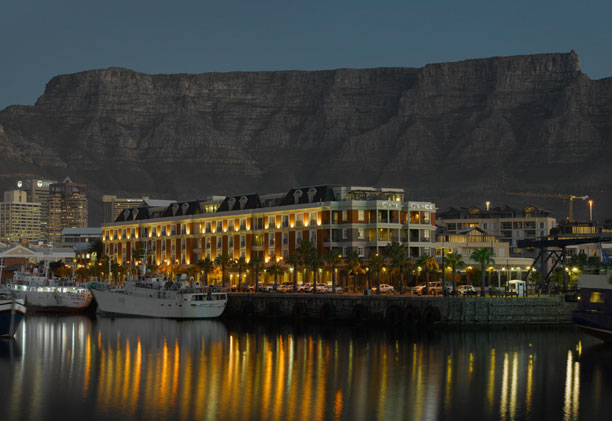
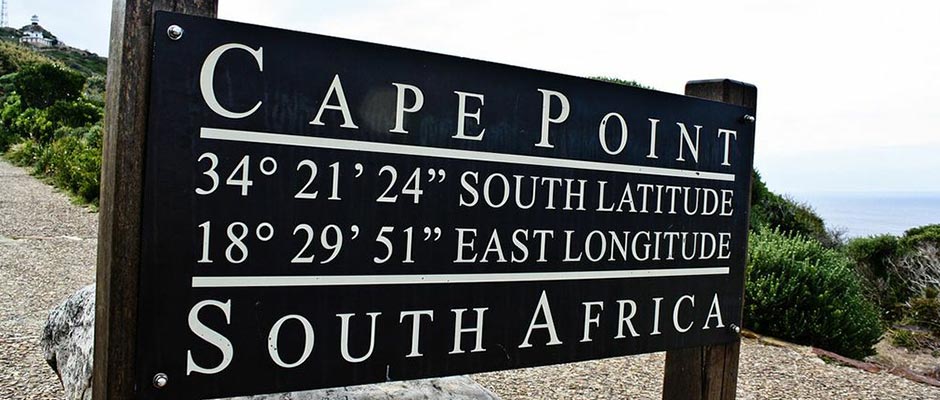
In Cape Town we will stay on the V&A (Victoria and Albert) Waterfront at Cape Grace Hotel, which sits below Table Mountain. From here we hope to visit Cape Point (the Cape of Good Hope), the most south-western point of Africa, rich in maritime history. Peter and Oliver also hope to visit a Cub Scout Troop while we are there.

Cape Grace Hotel, Cape Town

Cape Grace Hotel, Cape Town

Cape Point, Cape Town

Cape Point, Cape Town

From Cape Town we will fly to the edge of the Kalahari Desert and Tswalu Kalahari Game Reserve. Tswalu is South Africa’s largest private game reserve covering 100,000 hectares. Kalahari Bushman have lived here for 20,000 years. Unlike many game reserves, Tswalu welcomes children. We will stay in The Motse, which means “village” in Tswana, in little houses made of local stone, red clay, and Kalahari thatch. On game drives we will see lions, cheetahs, giraffes, rhinos, zebras and many more animals.

image-panel-2010-motse11

The Motse, Tswalu Kalahari Game Reserve

kalahari

Looking out over the Kalahari

Finally we will fly from Tswalu to Johannesberg and then on to Sydney.

Peter is enjoying planning this trip, although mindful of important contingencies. Many game reserves do not allow children under 12 to participate in game drives (thus his careful choice of Tswalu). We also are sticking to malaria free areas (which rules out for now amazing destinations such as Kruger National Park, in north-east South Africa, and KwaZulu-Natal, also north-east, with its rich and fascinating Zulu Kingdom history).

Over the coming few months I am going to encourage Oliver and Louisa to learn and post about South Africa and to help decide our day-to-day plans. We also need to plan our luggage carefully because there are very restricted weight limits on the small plane that will fly us from Cape Town to Tswalu. So lots of time to think about new bags, trial packs and safari clothing!

If you’ve been to South Africa and have any suggestions for things to do and places to visit, please post in the comments. More soon!