Author Archives: Amanda Barnier

Unknown's avatar

About Amanda Barnier

Mum to Oliver and Louisa, academic at Macquarie University

Speedsters of the veldt

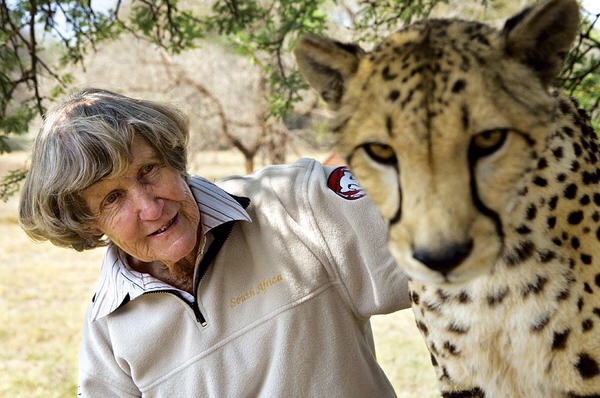
This morning, day 2 of our African adventure, we drove from Maropeng to the Ann van Dyk Cheetah Centre in De Wildt.

Ann van Dyk established her Centre in 1971 during a period when farmers, who feared Cheetahs and resented heavy stock losses from Cheetah predation, were hunting them towards extinction. van Dyk established a breeding centre to secure the long term survival of Cheetahs as well as other wild animals such as the African Wild Dog. Over the years, the staff of the Cheetah Centre have worked hard also on outreach activities to educate and involve farmers in managing Cheetahs in the wild. And van Dyk and her team are educating the next generation of South Africans to love and respect Cheetahs and other wild animals. They believe:

“We will conserve only what we love. We will love only what we understand. We will understand only what we are taught.”

Ann van Dyk

We arrived at the Centre and first read this sign:


Mildly nervous, we signed waiver forms and joined our guide. She explained that the Cheetah Centre is home to 60 Cheetahs and 50 African Wild Dogs, some from the wild and some hand raised at the Centre, as well as many other wild animals such as Cape Griffon Vultures.

Cape Griffin Vultures are one of the most endangered animals in all of Africa. This is because they are a highly prized hunting target for Africans who believe that if they eat the eyes of the Vulture and sleep with its head then they will be able to predict the future. This is because Vultures fly so high; above the clouds and able to see far ahead.


Our first stop on the tour was to see two Honey Badgers. These cute fluffy little guys apparently are the most dangerous creatures in the park! Lions are afraid of them because they are fearless, vicious fighters with long sharp claws, which they use to rip the soft under bellies of Lions and Cheetahs. Their favourite food is live snake! This is the one animal in the Cheetah Centre where the Keepers will not enter their enclosures. We also learned that young Cheetahs’ colouring mimics that of Honey Badgers, which keeps Lions away. What an amazing example of evolutionary adaptation!


Next we climbed into a safari bus for an extremely bumpy ride up into the hills surrounding the Cheetah Centre, past many enclosures with Cheetahs, African Wild Dogs and other animals.
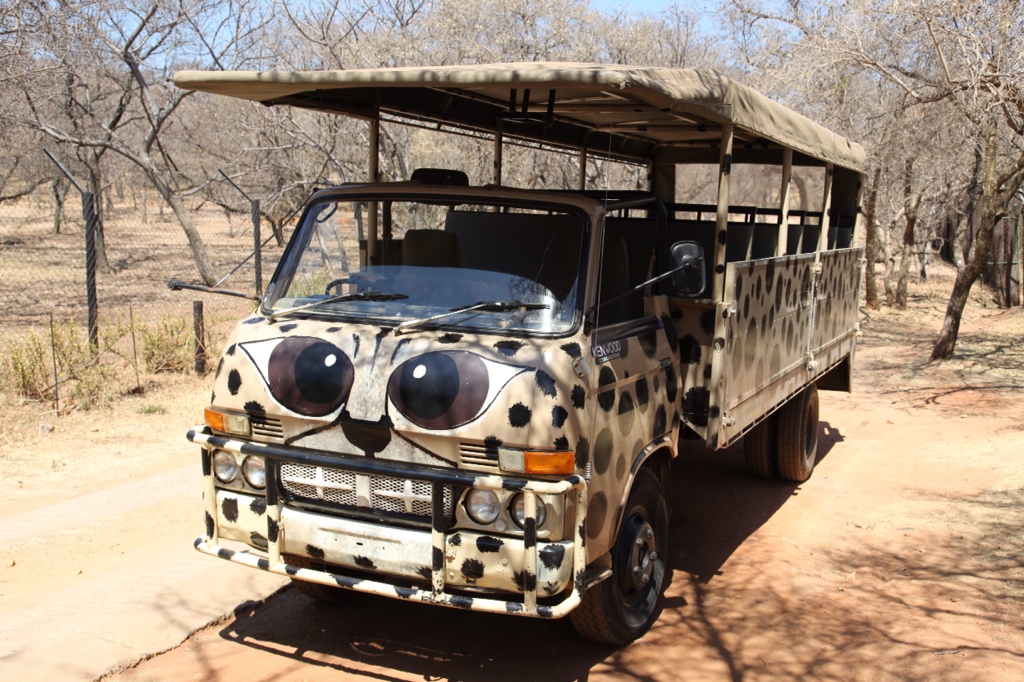
 

First we saw beautiful Cheetahs that prowled up and down the fence waiting for large chunks of meat that the Ranger threw over the fence. The pattern of spots on each individual Cheetah is different from all others; like human fingerprints! Nevertheless, the general patterning of these spots is inherited from their parents, including the elusive King Cheetah pattern. This distinctive dark striped pattern once was thought to represent a separate species but is now known to be the result of a rare mutation within Cheetahs. The De Wildt Centre helped to solve this mystery when it bred two litters of Cheetah cubs, each with one King Cheetah cub.


Next we saw many groups of African Wild Dogs, who live in packs. They are under threat in the wild but thriving at the Cheetah Centre. Cubs bred at the Cente are released back into the wild. Our Ranger told us that whereas wild dogs are quite wary of humans, hand reared animals are extremely dangerous to the Keepers. This is because in the wild, dog packs are organised hierarchically. African Wild Dogs fight their way to the top by biting other dogs. So if they think you are in their pack, as they view the Keepers who rear them, they will bite you to assert dominance!

We saw two litters of pups with their Mum and Dad. These pups below are about 16 weeks old. They are greedy, noisy, impolite eaters!


We also saw sweet, little Meerkats. Oliver and I saw a large group of Meerkats at London Zoo when we visited June 2013. We also expect to see more when we fly to Tswalu and the Kalahari Desert.

IMG_0740.JPG

It was amazing to get up so close to these beautiful animals. But not too close! One of the Cheetahs sized us up from behind his fence and growled a very menacing growl at us. Beautiful but happily separated by a fence!


Tomorrow we board The Blue Train for our journey across South Africa from Pretoria to the Cape.


Maropeng, “welcome home”

We flew into Johannesburg, South Africa, last Friday night and drove around the outskirts of the city to our first night’s accommodation at the Maropeng Hotel, within the Cradle of Humankind World Heritage Site. As we drove, we passed a city of immense contrasts: the homes and cars of wealthy South Africans. And the crowded, extremely basic conditions of South Africans who live in Townships. Our guide Liese told us that entire families live in a space probably no bigger than Oliver’s bedroom.

Maropeng is the centre of the Cradle of Humankind World Heritage Site. From their website:

“The 47 000-hectare site has unearthed the best evidence of the complex journey which our species has taken to make us what we are – a place of pilgrimage for all humankind. It is not only a place of ongoing scientific discovery into our origins, but also a place of contemplation – a place that allows us to reflect on who we are, where we come from and where we are going to.”

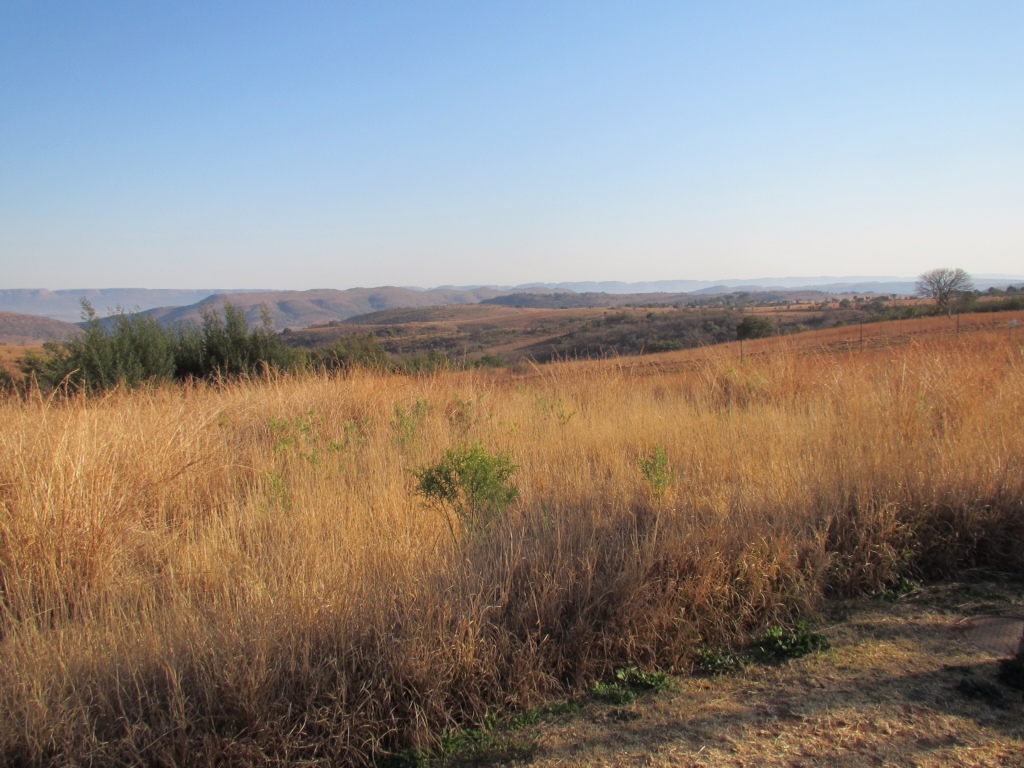
We woke very early on Saturday and waited for sunrise looking across the veldt towards mountain ranges in the distance. Not far from our door, Blesbok Antelopes grazed and wandered.


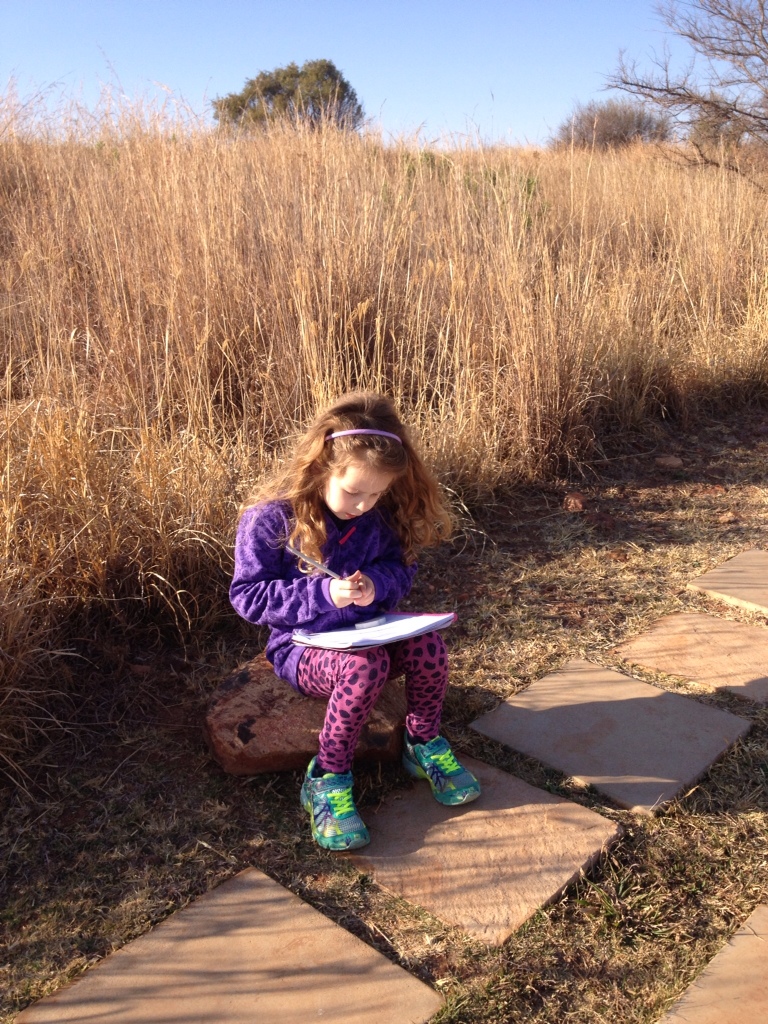
Over a delicious breakfast of fresh fruit, juice, pastries, meats and cheeses Louisa started a diary to record all the things she is learning about Africa. She remembered that last night our guide told us that there are at least 8 official languages in South Africa. As we explored throughout the morning Louisa stopped often to record thoughts and observations in her diary such as:

“I love Africa. I want to live in Africa. Africa has lots of rocks.”


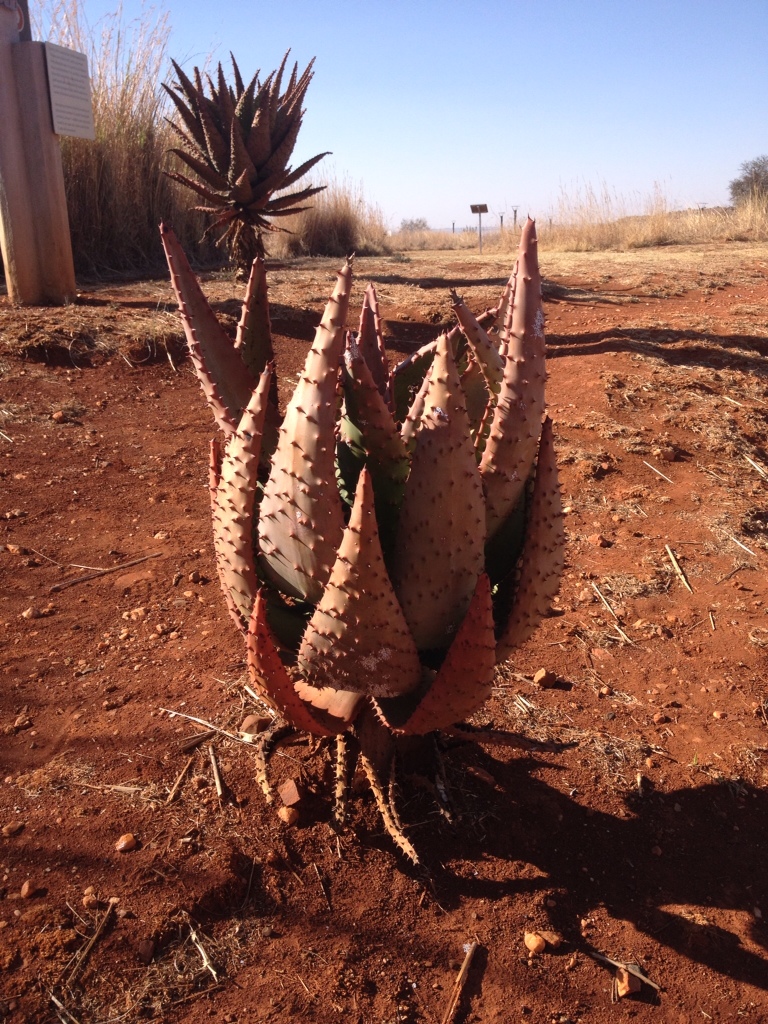
At first, from our balcony, the mountain ranges in the distance looked a little like the Blue Mountains, which lie west of Sydney. And yesterday the road to Maropeng reminded us of the road between Canberra and Jindabyne in southern New South Wales. But on foot, our surroundings looked entirely distinct. With red, red earth, enormous prickly cactuses (Aloes) like something out of John Wyndham’s imagination, and warnings of snakes just off the path.


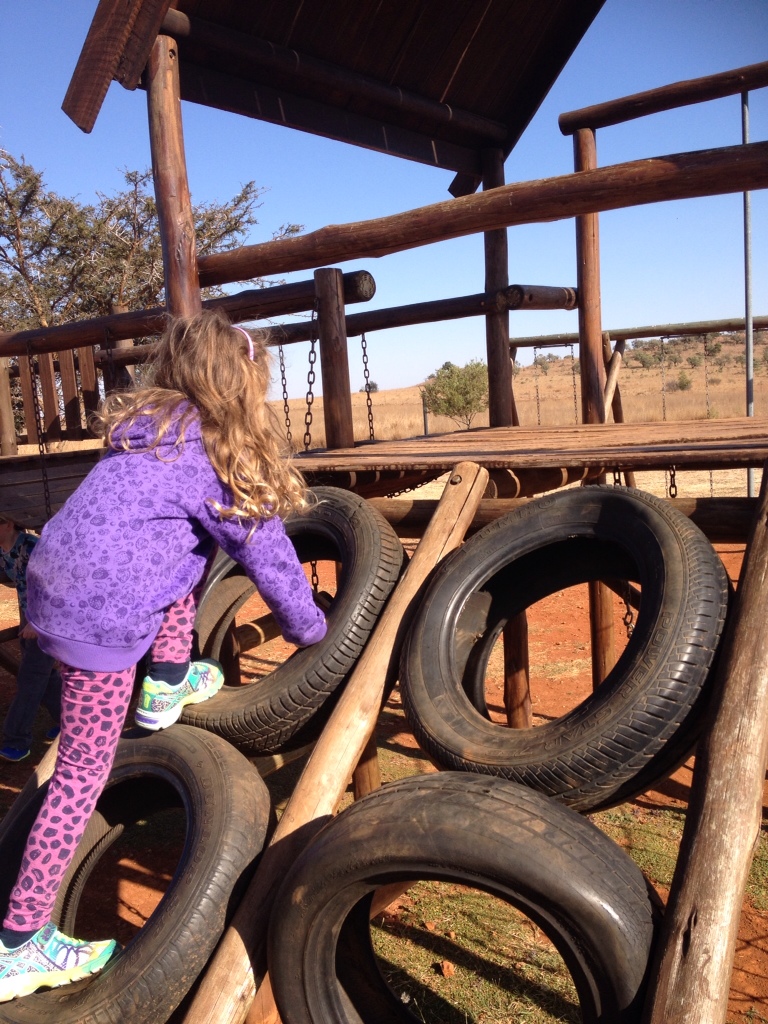
Soon we came across something completely mundane yet beautiful amidst the glorious African landscape. A playground. This playground included equipment you had to navigate on all fours, just like our very distant ancestors, as well as equipment you had to navigate upright. Just like our nearer ancestors. The playground was part of the Maropeng Visitor Centre.


The Maropeng Visitor Centre is a museum/exhibition that focuses on the development of humans and our ancestors over the past few million years. It is housed inside and underneath a massive burial mound called the Tumulus.


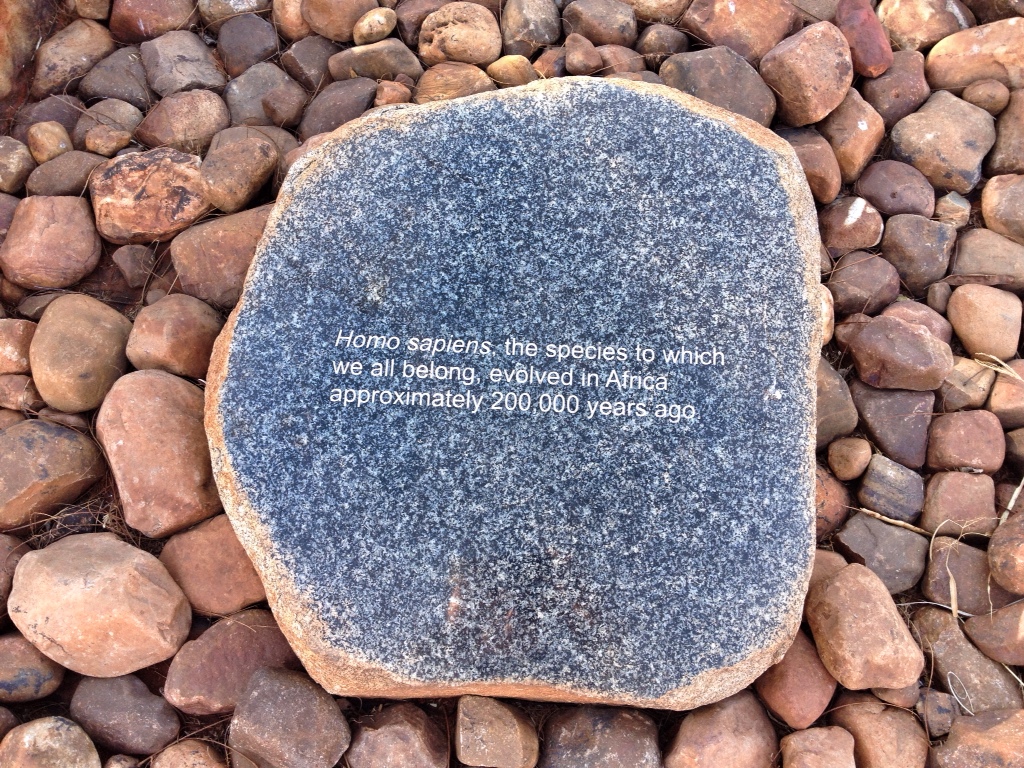
The idea that all humans originated in Africa was first proposed by Charles Darwin, who introduced the theory of evolution (together with Alfred Russell Wallace), in his book “The Descent of Man”. This view was controversial for a long time. Many other scientists believed that the “cradle of humankind” would be found in Europe and Asia. But the fossil record for an “Out of Africa” hypothesis proved compelling and was finally confirmed by DNA evidence in the 1980s.

Maropeng and surrounding sites are home to the oldest hominid fossils as well as fossil remains of our nearest ancestors. The Maropeng Visitor Centre tells the story of evolution, explains the timeline of and controversies around the discovery of hominid fossils in this area, and argues that Africa (and this area in Eastern South Africa) is the birthplace of humankind. Thus, we were greeted by “welcome home” when we arrived at the Maropeng Hotel on Friday night.


An Australian anthropologist, Professor Raymond Dart, was central to this story. We learned from the exhibition that:


Dart published his controversial conclusions about Australopithecus africanus in a 1925 paper in the journal Nature, which you can read here.

Professor Raymond Dart and the Tuang Skull

On Saturday night, after a busy day exploring Maropeng, Oliver and Louisa were falling asleep at the dinner table. The jetlag hit them hard; dinner time here, 6pm, is 2am Sydney time. But they slept well and long Saturday night, and woke ready on Sunday for Day 2 of our African adventure! A cheetah park, a monkey park, and preparing to board The Blue Train early Monday morning …


More soon!


The day before the day before we leave: Packing

Peter and I are packing for ourselves and the kids — Oliver and Louisa — before we fly to Africa in less than 36 hours. We realised today, as we debated which bags to pack what into, that we have an awful lot of luggage lying around our house. Peter has the original backpack he took on his first journey around Africa more than 20 years ago, as well as the backpack from his 18 month sailing voyage from Sydney to Europe via South East Asia and the King’s Cup in Thailand, across the Indian Ocean and up the Red Sea to the Sailing World Cup in Cyprus. And I have luggage galore from an academic career of conferencing and lab visits around the world, not to mention an ongoing love affair with Crumpler and Rushfaster, among other luggage and travel specialists (Magellan’s, Flight 001, Ciao Bella Travel …).

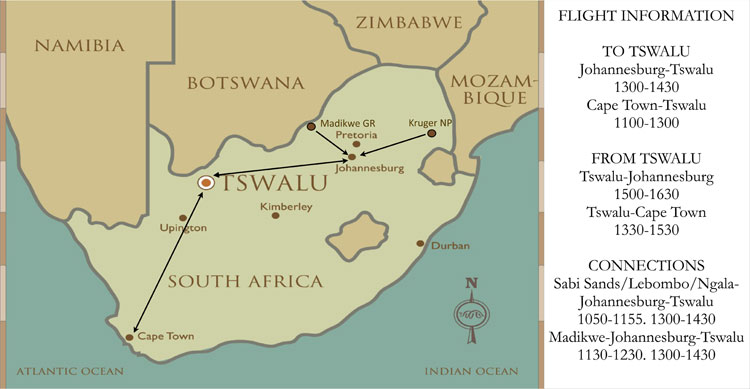
Our packing task this trip has a slightly higher degree of difficulty because although we each can take 40 kilograms of checked luggage and 7 kgs of hand luggage onto our international flights, we only are allowed 12 kgs of checked luggage and 6 kgs of hand luggage each on the small private plane that will take us 850 kilometres north from Cape Town to the game reserve, Tswalu Kalahari.

We also need to bring formal(ish) wear for dinner on The Blue Train, which will take us from Johannesburg to Cape Town on one of the first legs of our journey. And Tswalu is almost the last leg of our journey after 5 days in Cape Town. So where and how to pack any souvenirs we might like to buy?

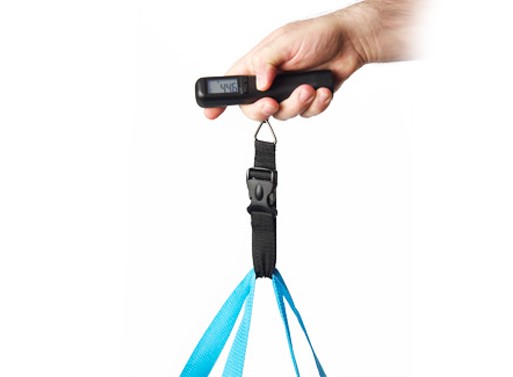
So here’s our first crucial piece of packing equipment: a portable digital travel scale. I picked mine up in Flight 001 in San Francisco, but you can buy similar versions very easily. For around $20 you can keep under those weight limits.

timthumb

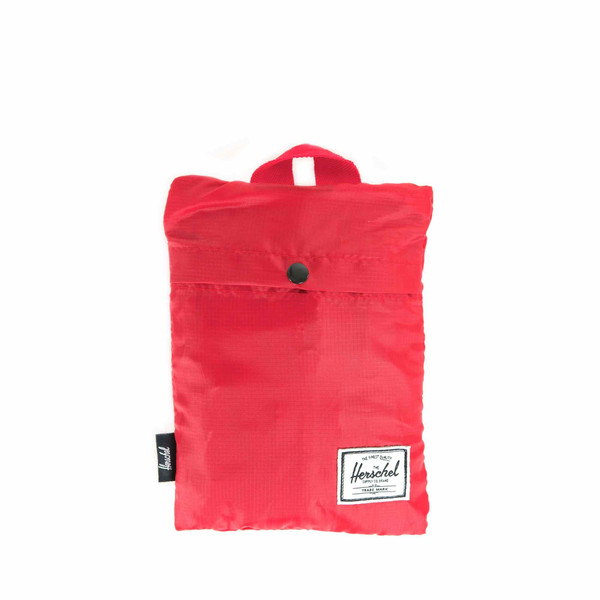
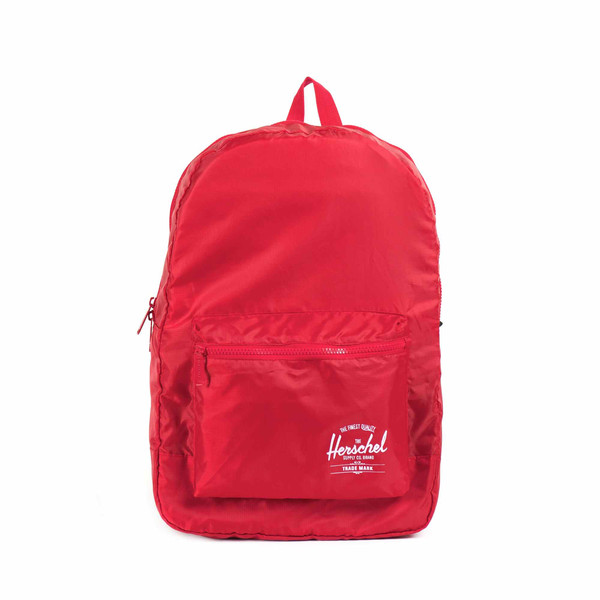
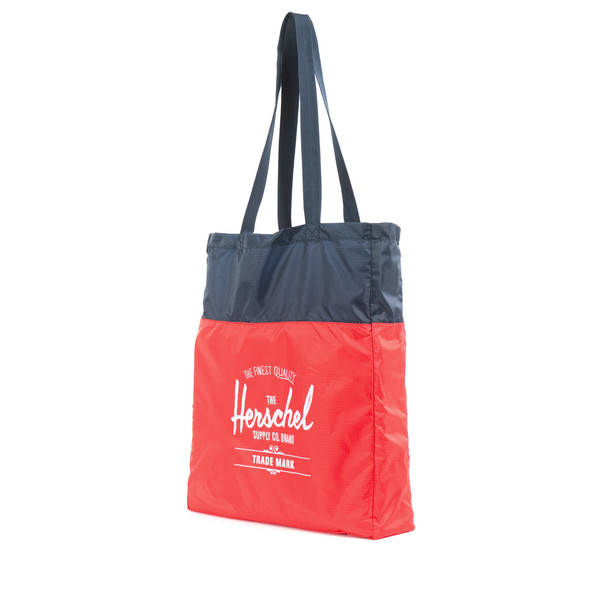
I also really love Herschel Packable Luggage. I have a backpack, again from Flight 001, which transforms from a small little soft parcel that is easily stashed in your bag into a good sized, light weight backpack. I use it when I hire a bike during a conference trip or when out and about for the day.

10076-00184-OS_08_grande

10076-00184-OS_01_grande

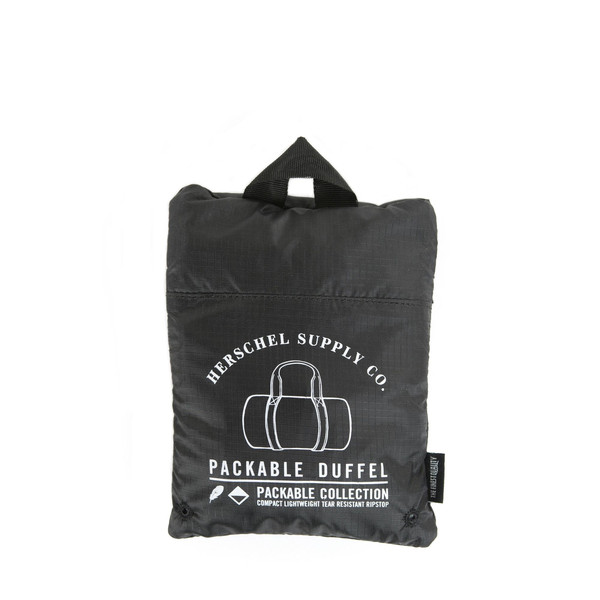
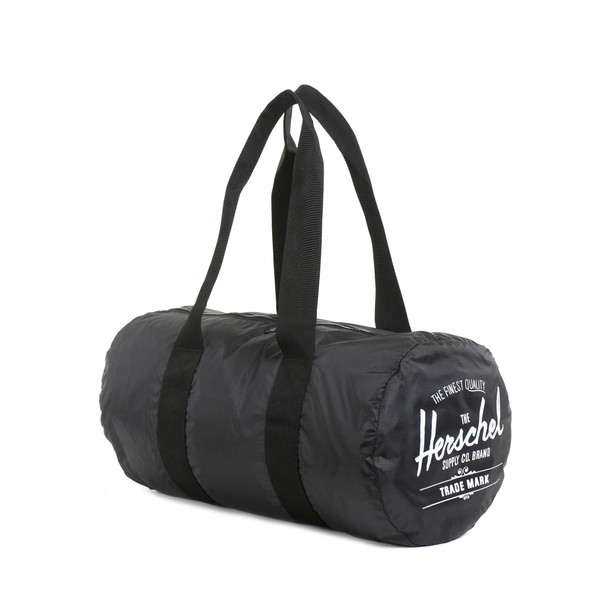
For this trip and for Father’s Day, the kids gave Peter a packable version of Herschel’s duffle bag:

10078-00003-OS_06_9d81c81c-553b-4dc5-bd95-4ff4d74d2e5a_grande

10078-00003-OS_02_0503e114-8135-4a8d-bb99-3b760d2ba317_grandeThis will be perfect for when we need to decant some of our luggage for The Blue Train trip. Our sweet little sleeper cabins (perfectly formed but limited space) can’t fit all of our luggage, so we need to separate what we need for the train journey from everything else, which will be stored in a luggage hold.

luxury-suites-1

Herschel Packables also include a messenger bag and a tote. I often buy a cheap tote bag from the airport book store to carry my overflow water bottles, coat, magazines etc, but Herschel’s likely would be more long lasting.

10077-00009-OS_02_39d80cbc-7682-417c-8f71-72ded5696950_grande

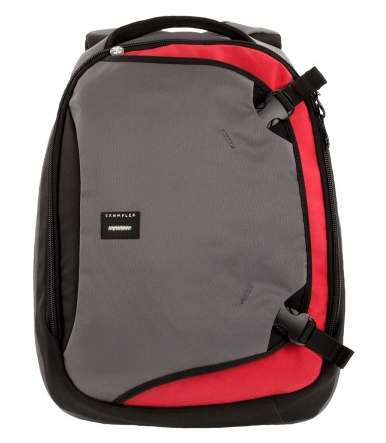
My final go to bag when packing is my Crumpler Dry Red No 5 backpack. I have blogged about this before and have been singing the praises of this bag far and wide. Recently I purchased two of these bags in black for our memory research team, so they can transport our electronic and audio equipment back and forth from Sydney to Melbourne. This carry on bag safely stores my laptop, iPad, kindle, a change of clothes, wallet, some toiletries, paperwork and other odds and ends.

I adore Crumpler bags and have far too many or not enough. This is one of my favourites:

Crumpler Dry Red No 5 Backpack

Crumpler Dry Red No 5 Backpack

So back to the packing. The only other challenge we face is that Peter and I both are reasonably seasoned travellers; at least for work travel. So we each have our own preferred luggage, methods of packing, tricks and lists. Yes, so back to the packing and the negotiations. Next stop: the airport.


4 days to go, thinking about money and things

We are on the final countdown to departure — we fly to South Africa on Friday morning — and today I collected some South African currency we ordered from our Bank. In other countries we use a Travelex Cash Passport. You preload currency onto a debit card and you can use it to pay by Eftpos or to withdraw cash at ATMs. We have used the Cash Passport with great success in England, the Netherlands, Japan and the USA. But the Cash Passport unfortunately does not take South African currency: the Rand.

So we ordered some notes to take with us. The current exchange rate — the price at which we can exchange Australian Dollars (AUD) for South African Rand (ZAR) — is roughly 1 to 10. 1 AUD buys 10 ZAR. This means each Rand is worth about 10 cents in Australia. So:

  • AUD$2 buys you ZAR$20
  • AUD$10 buys you ZAR$100
  • AUD$20 buys you ZAR$200

South African currency is lovely and colourful like Australian currency. On one side of each note there is a portrait of President Nelson Mandela. On the other side of each note there is a picture of a South African animal, such as an elephant (20 Rand) and cheetah (200 Rand). Like Australian money, South African notes have a number of security features: watermarks and metal strips.

In this You Tube video diary (after finally coaxing her onto camera), Louisa explains the difference between Australian money and South African money and things! Please follow this link:

http://youtu.be/2Y9y5D7YKjU


With one week to go, what Oliver is looking forward to in Africa

We are trying out video diaries for our African blogging. We’d like to be able to send links to Oliver’s class (3/4T) and Louisa’s class (KR) and let their classmates follow along with Oliver and Louisa’s journey. I am struggling a bit with uploading videos to the blog on iPhone or iPad. I can get it to work on my laptop but I won’t be taking my laptop. So after some fiddling around here goes. A short video of Oliver describing what he is looking forward to in Africa (in two parts via Instagram, which has a 15 second limit, or the full version via You Tube). We now have an Instagram account and a YouTube Channel you can subscribe to where our photos and videos will appear as I work out the best workflow for blogging on the go. Look for “oliverandamandaineurope”:


Part 1:


Part 2:


Or try this link of the full video from You Tube:


Towards African skies

…His path was marked

By the stars in the Southern Hemisphere

And he walked the length of his days

Under African skies.


In February this year I posted about a planned trip to South Africa in May 2014. Although Peter went ahead with his conference travel, our family holiday was postponed due to my work commitments. So now we leave for Johannesburg and the start of our 17 day African adventure in exactly 2 weeks.

We fly out of Sydney Friday morning and arrive in Johannesburg Friday evening. We then travel to Maropeng, home of the Cradle of Humankind: birthplace of humanity. “Maropeng” means “returning to the place of origin” and we will be able to tour the Sterkfontein caves where scientists have discovered almost complete Australopithecus skeletons dating back more than 3-million years.

From Maropeng we return to Pretoria to board the historic Blue Train and start a 28 hour journey to Cape Town through the heart of South Africa. From their website:

As time meandered from the 19th Century towards the dawn of the new era, a dream was born. A dream of harnessing steam technology to link Africa’s vast south to north, around the awe-inspiring mountain ranges that dot the continent, through the apparently arid desert landscapes, over untamed savannah grasslands teeming with wildlife. From the Cape all the way to Cairo… all of this on parallel lines of tempered steel.

It is from this dream that The Blue Train was born. Cairo was never to be, but the dreamers persevered and The Blue Train now traverses South Africa and its breath-taking scenery in a manner that befits the mystique that has grown around it.

Welcome aboard The Blue Train. Your unforgettable experience is about to begin…

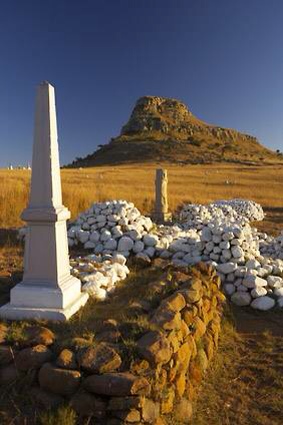
Louisa is looking forward to seeing the wildlife, African playgrounds, and the white rocks (white stone cairns that mark the graves of British soldiers who fell during the 1879 Anglo-Zulu war, which she saw in a picture in one of our guidebooks). Most of all she is looking forward to seeing African Hunting Dogs (her namesake!).


So onwards to African skies. More updates soon …


oliver&amanda&louisa&peterinafrica

I am reviving this blog a second time to document a new adventure. In May this year, my husband (and Oliver’s dad), Peter, is attending a conference in Pretoria, South Africa. Peter backpacked through Africa in the early 90s, although not South Africa, which still was in the grip of apartheid and under sanction. He started in Harare, the capital of Zimbabwe, africalargemapand travelled through Botswana, Zambia, Malawi, Tanzania, Zanzibar, Kenya, Uganda, Rwanda, the Democratic Republic of the Congo and Burundi. He was on the road for 6 months. I will ask him to post some pictures and memories to the blog at a later date.

Peter is keen for the whole family to travel to South Africa and join in a safari adventure.

Peter will fly first and then Oliver (9), Louisa (5) and I will fly a few days later to meet him. We will fly from Sydney to Johannesburg and drive to Pretoria. Pretoria is one of three capital cities in South Africa.  Interestingly, South Africa has separate capital cities dedicated to the executive (Pretoria), the legislature (Cape Town), and the judiciary (Bloemfontein). So perhaps somewhat like Canberra?

While waiting for Peter to finish his conference commitments and for the first of three legs of our trip to start, we hope to visit a cheetah research and breeding centre as well as the “Cradle of Humankind” World Heritage Site, where it is claimed humans originated from.

elegant-lounges-21

On board the Blue Train

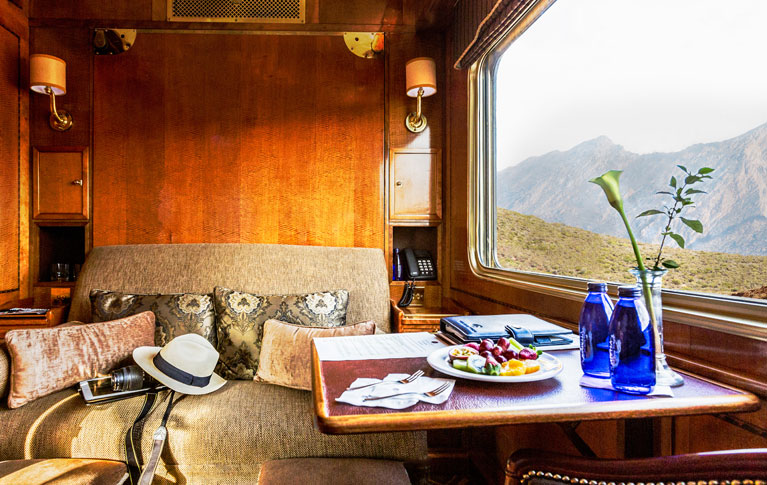
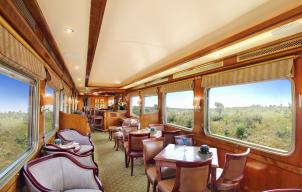
A few days later we plan to travel on The Blue Train from Pretoria to Cape Town: a 27 hour, 1,600 kilometre journey through the heart of South Africa. The Blue Train was part of a plan in the 19th century to build a train line for steam engines from Cape Town to Cairo. The line was built in the 1920s but only got as far as the Zambezi River; far from Cairo. Today it still runs around mountains, across deserts and over grasslands from the top to bottom of South Africa and back. We can watch the African world go by out the windows of luxuriously restored carriages; the Blue Train is billed as “a window to the soul of South Africa”. Half way to Cape Town we stop in Kimberley; an historical diamond mining town and home of the famous De Beers company.

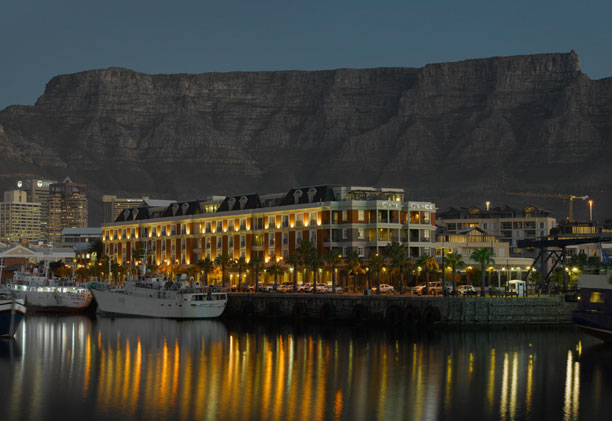
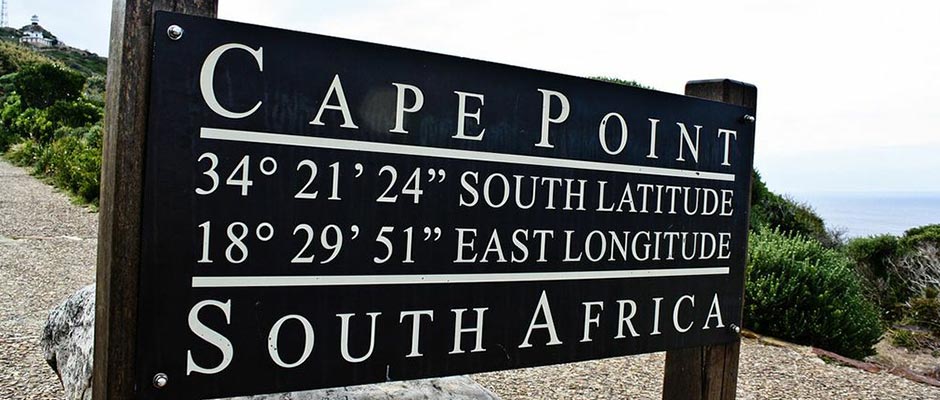
In Cape Town we will stay on the V&A (Victoria and Albert) Waterfront at Cape Grace Hotel, which sits below Table Mountain. From here we hope to visit Cape Point (the Cape of Good Hope), the most south-western point of Africa, rich in maritime history. Peter and Oliver also hope to visit a Cub Scout Troop while we are there.

Cape Grace Hotel, Cape Town

Cape Grace Hotel, Cape Town

Cape Point, Cape Town

Cape Point, Cape Town

From Cape Town we will fly to the edge of the Kalahari Desert and Tswalu Kalahari Game Reserve. Tswalu is South Africa’s largest private game reserve covering 100,000 hectares. Kalahari Bushman have lived here for 20,000 years. Unlike many game reserves, Tswalu welcomes children. We will stay in The Motse, which means “village” in Tswana, in little houses made of local stone, red clay, and Kalahari thatch. On game drives we will see lions, cheetahs, giraffes, rhinos, zebras and many more animals.

image-panel-2010-motse11

The Motse, Tswalu Kalahari Game Reserve

kalahari

Looking out over the Kalahari

Finally we will fly from Tswalu to Johannesberg and then on to Sydney.

Peter is enjoying planning this trip, although mindful of important contingencies. Many game reserves do not allow children under 12 to participate in game drives (thus his careful choice of Tswalu). We also are sticking to malaria free areas (which rules out for now amazing destinations such as Kruger National Park, in north-east South Africa, and KwaZulu-Natal, also north-east, with its rich and fascinating Zulu Kingdom history).

Over the coming few months I am going to encourage Oliver and Louisa to learn and post about South Africa and to help decide our day-to-day plans. We also need to plan our luggage carefully because there are very restricted weight limits on the small plane that will fly us from Cape Town to Tswalu. So lots of time to think about new bags, trial packs and safari clothing!

If you’ve been to South Africa and have any suggestions for things to do and places to visit, please post in the comments. More soon!

“On the rim of the world I am dancing!”

The Huchiun Tribe of Native American Ohlones first settled along the shores of Richmond and the East Bay, across the water from present day San Francisco, 4000 years ago.

One Ohlone song translates in English as:

“See! I am dancing!

On the rim of the world I am dancing!”


It certainly feels as if Rochelle and I have been riding our bikes on the (glorious) rim of the world! On Sunday afternoon, after the conference finished, we rode North West from the Berkeley Marina, hugging the coast along the Marina Bay Trail (part of the San Francisco Bay Trail). We cycled past Point Isabel to the Richmond Marina and on to Ford Point.

We passed marshlands.


We stopped for lunch at Richmond Marina.


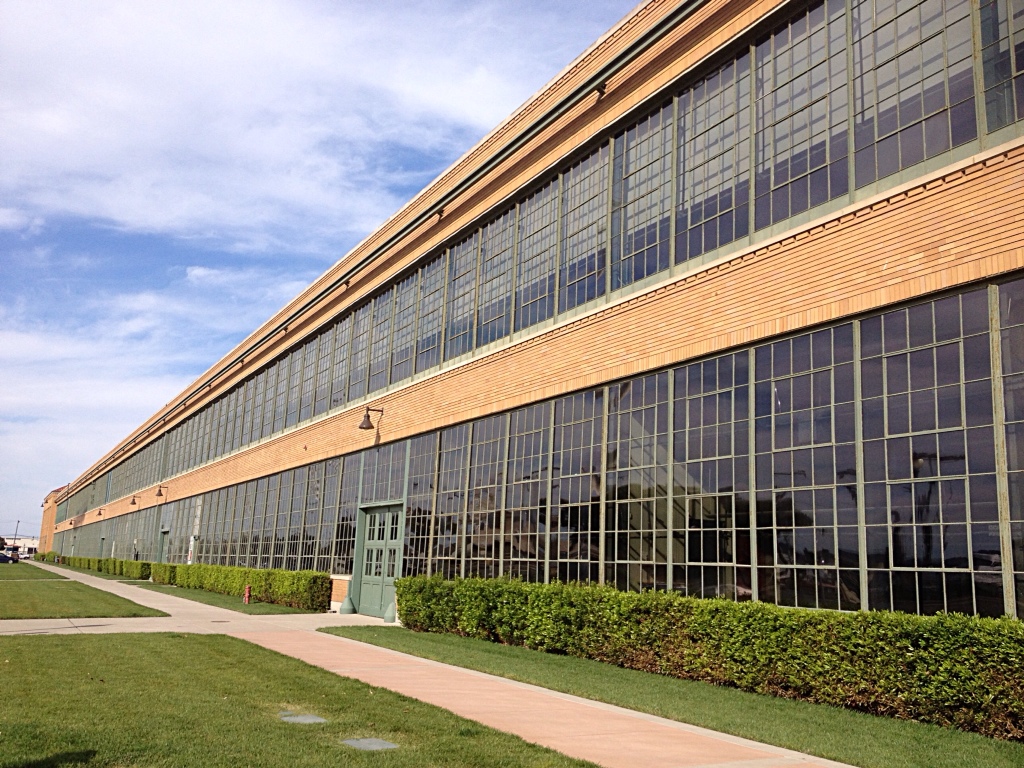
We then rode around Richmond's industrial waterfront. In the early years of the 20th century, the Santa Fe Railroad made its way to Richmond. Richmond's first port was built in 1915 (Terminal #1), with two new port terminals added in the late 1920s. By 1930, Richmond Port was home also to the Filice and Perrelli Cannery and the Ford Assembly Plant. In the 1940s, Henry J Kaiser built four giant shipyards. The Marina, completed in 1981, stands on the site of the former Kaiser Shipyard #2.


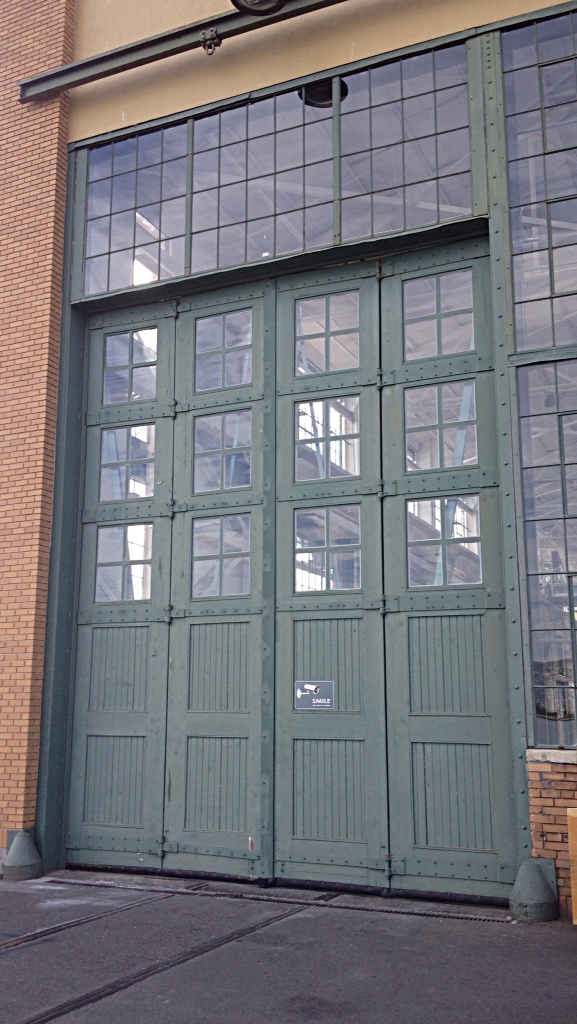
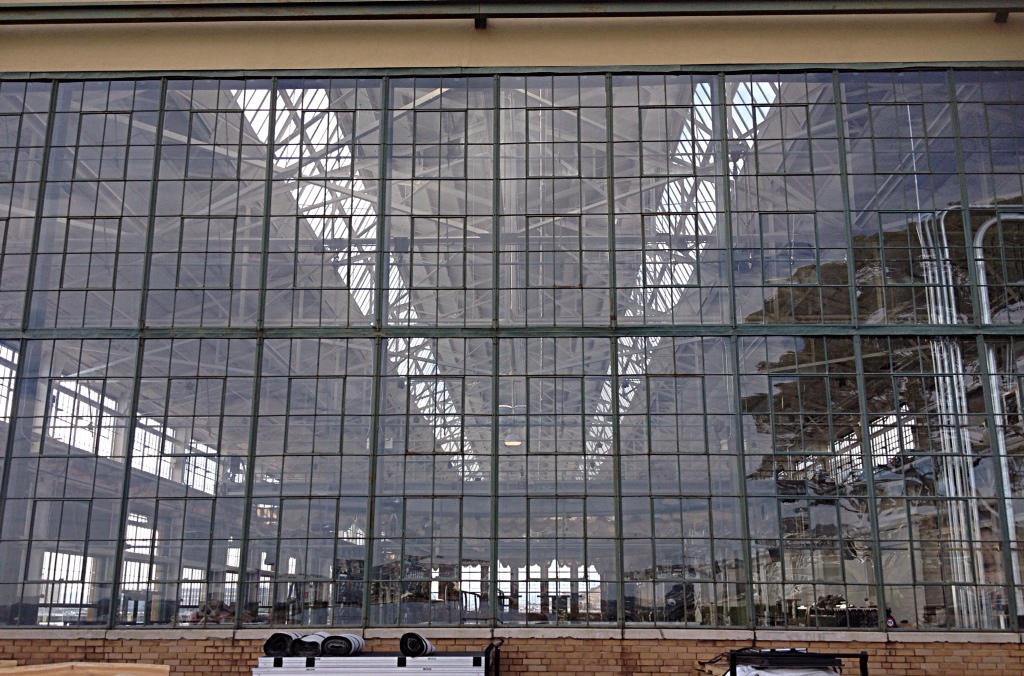
The Richmond Ford Motor Co Assembly Plant was the largest assembly plant on the West Coast. During World War II it rolled out combat vehicles rather than motor cars. In recent times, the beautiful building, designed by Albert Kahn in a distinctive 20th century industrial style, fell into disrepair and was scheduled for demolition. But it has been rescued and renovated.


The Bay Trail is beautiful, although it seemed strangely deserted. A local man, a Native American who grew up in the East Bay, rode with us for a time and told stories of playing as a boy in the coastal salt marshes that the Trail now passes through. Near the Marina, we stopped to buy and drink home made lemonade at a lemonade stand set up by some local children: 50 cents for a cup, 75 cents for two cups. I paid $5 for 4 cups and waited for change, but they were quite little kids and perhaps had not yet learned in their math class about subtraction and making change. But $5 seemed a small price to pay to pump prime the American (children's) economy during a week of budget crisis and government shutdown!

My daughter Louisa and her Balloon Stand


You can find out more about riding the 500 miles of planned bike paths around San Francisco and the East Bay here: http://www.baytrail.org/.


Memories of Berkeley and International House

This morning Rochelle, Vince, Maja and I caught the shuttle to downtown Berkeley (Rochelle Cox and Vince Polito are two of my former PhD students, now Postdoctoral Fellows at Macquarie University; Maja is Vince’s partner). We walked through the UC Berkeley campus and then up Bancroft Way, which serves as the southern boundary of the University. At the top of Bancroft Way on Piedmont Avenue, looking west, is International House.


International House opened its doors to international and US students and scholars in 1930. It was built and paid for by John D Rockefeller Jr and Harry Edmonds, who also built International House in New York. I learned today that Berkeley's International House was built facing west over the Pacific to mirror New York's International House, which was built first and faces east over the Atlantic.

I lived at International House for 6 months from January 1998. I was lucky to have a Bay View room. When the weather was fine I could see all the way to the Golden Gate Bridge.

Here is a photo of Rochelle, Vince and Maja today in front of I-House with the window of my old room circled.


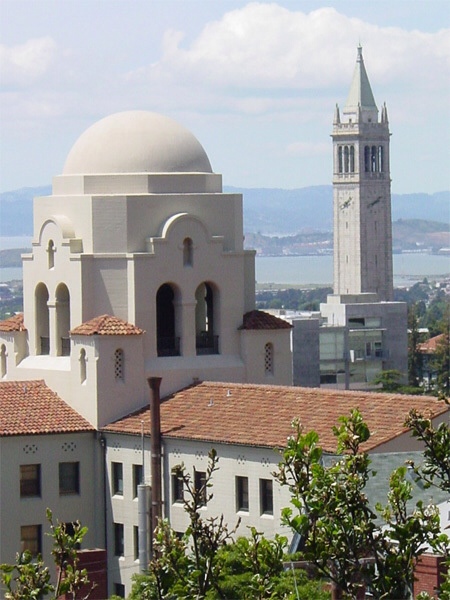
International House was built in Spanish Colonial Revivial style, with enormous black wrought iron chandeliers in the Great Hall, beautiful tiles everywhere, elaborate ceilings, and the large white dome that sits atop the building. The Great Hall (pictured below) was the place where we could sink into oversized leather sofas, watch basketball on a giant TV (first there got to choose the channel), dress up for the Winter Ball, or play a game of Cleudo that might go on for days.

The Great Hall, International House


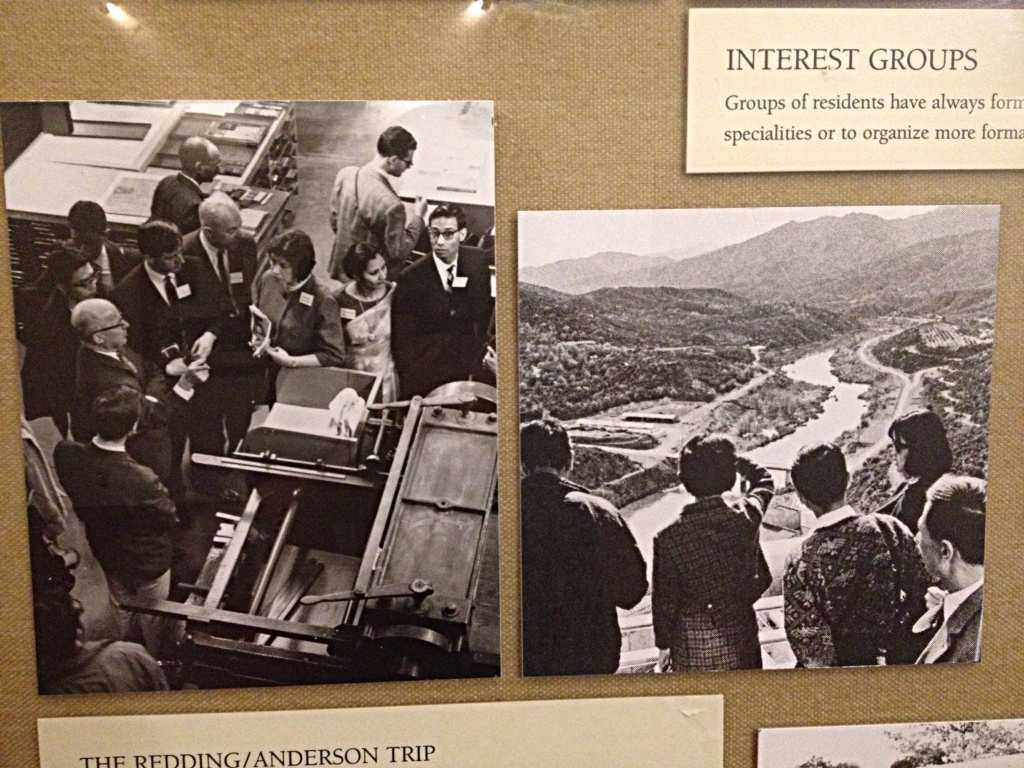
In April of 1998, during the Spring Break, I joined an International House trip to Redding in Northern California. We were hosted by members of Redding's Rotary Club and their families. I stayed with a lovely family (whose name escapes me now although I can picture their house and garden in my mind's eye). I learned today, wandering through a display on the history of I-House, that these trips to Redding started in 1952! I read this:


Just like scholars and students since 1952, I visited the local newspaper, took a boat ride on the amazing Shasta Dam, walked through a pulp mill, and was treated to a BB King concert (which, unfortunately I slept through because I was so tired, dreaming the whole time of plates crashing on the floor; the drums and guitars must have filtered into my subconscious as I slept in my seat). I learned what a pot luck dinner was and discovered a flair for bowling. Most importantly I was treated like a part of my host's family when I was far from home and very homesick.

As I read the words of the Indian student in the photo above, memories of my homesickness as well as gratitude for the care of strangers came flooding back. I hadn't thought of that trip to Redding in probably 15 years.

An earlier generation of I-House residents visiting the Redding Newspaper and Shasta Dam


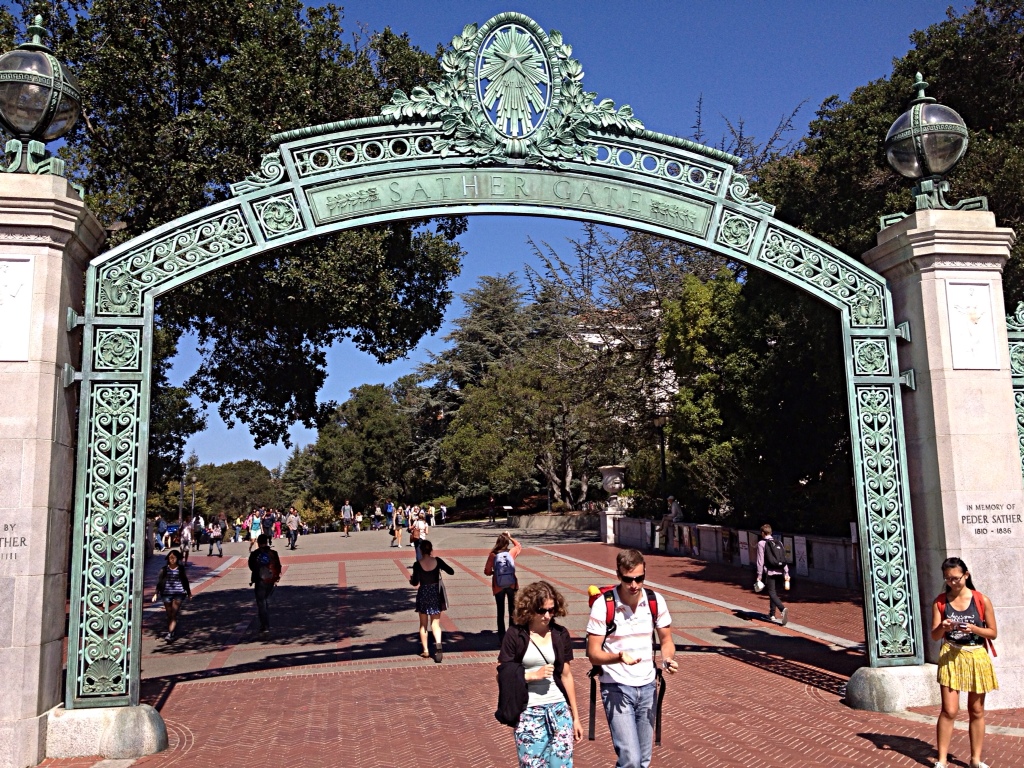
Every day I lived in Berkeley I walked onto the campus through historic Sather Gate (below), past Sather Tower (below; a clock and bell tower nicknamed “the Campanile” after its architectural inspiration, St Mark's Campanile in Venice), and over to Tolman Hall, home of the Psychology Department and of the sponsor of my visit, Professor John Kihlstrom. You can read more about the history of UC Berkeley here and about its architecture here. It was lovely retracing those steps and remembering my days in Berkeley: days that often challenged me, sometimes delighted me, and definitely changed me. Berkeley has changed too it seems, with Telegraph Avenue more run down that I remember; Shattuck Avenue more built up; and a lovely new shopping and restaurant area way down on Fourth Street.

Sather Gate, UC Berkeley


Sather Tower


Tomorrow will be another chance to revisit the past (and hopefully point to some possible futures) when our hypnosis conference starts. Until then I leave you with this quote from John D Rockerfeller Jr on his vision for International House (from a fascinating history):

The idea of the establishment of this institution on the Pacific Coast was suggested by the success of a similar one on the Atlantic Coast, in New York City, which has become well and favorably known throughout the world. By bringing together in unfettered cooperation the educated young people of all lands, many of whom will in years to come be leaders in their several countries, and by giving them the full opportunity for frank discussion on terms of equality, there is being performed, I believe, a service for the well-being of the world, the importance of which it is difficult to over-value. International House is a laboratory for a new kind of experiment – the day-to-day practice of international fellowship among men and women.

Tonight I am thinking of you, my long ago friends from I-House: Dimitar from Bulgaria (who taught me how to say “epiphany” in Bulgarian) and Shigeru from Japan.


Back across the Bay

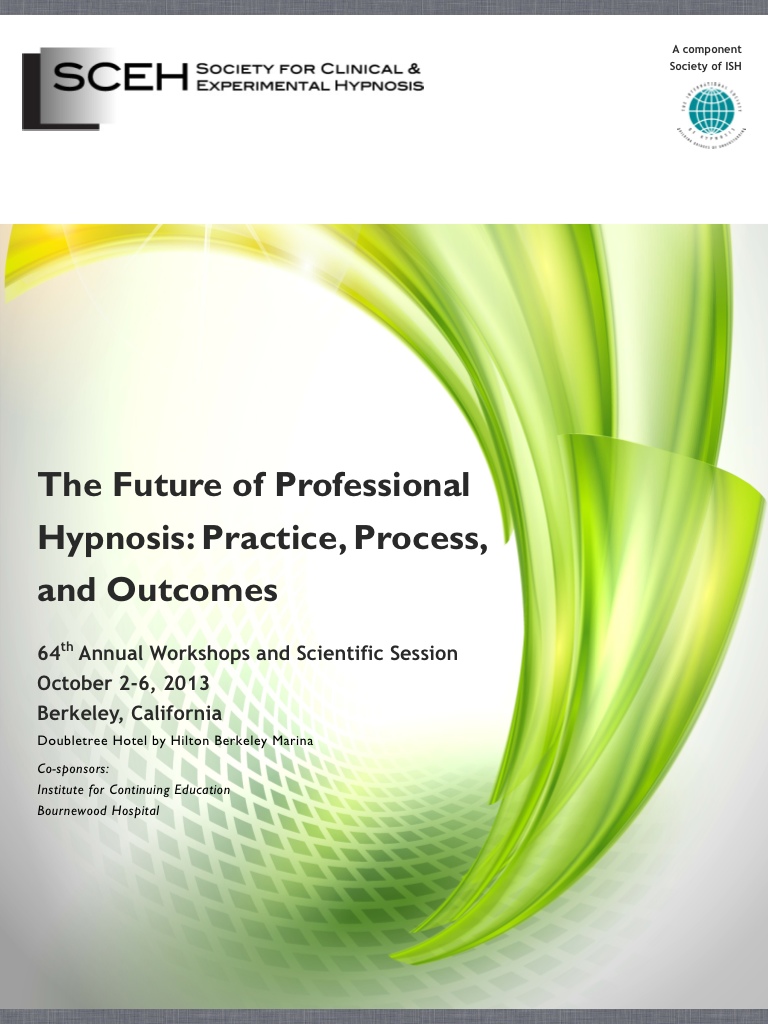
I am reviving this blog for a couple of weeks to record my upcoming trip to the 64th Annual Workshops and Scientific Session of the Society for Clinical and Experimental Hypnosis in Berkeley, California, across the Bay from San Francisco. This venerable Society was founded in 1949 following the success of hypnosis on the battlefields of World War II. SCEH formalised these clinical successes as well as capitalised on an experimental history as long as any other area of psychology (and perhaps longer than psychology itself).

SCEH 2013


My personal history in hypnosis also is entwined with SCEH. My very first international conference was SCEH's 45th Annual Meeting way back in 1994. It was held in San Francisco's Hotel Nikko in Japan Town.

I remember:

  • Meeting all of my heroes in hypnosis, who I only had read about: Ernest Hilgard, John Kihstrom, Kenneth Bowers, Jean-Roch Laurence, Erik Woody, Bob Nadon, Steve Lynn, Mike Nash;
  • Feeling like a Martian who finally had returned home to her people (because almost nobody else was doing hypnosis research in Australia when I was doing it);
  • People coming up to kiss me and congratulate me after my talk; my first big international talk;
  • My parents standing proudly up the back listening to my talk;
  • My supervisor trying to get us into a bikie bar!

It will be lovely to be back in San Francisco at the same conference nearly 20 years after I first attended; seeing some of the same faces again.

Following my PhD I spent time as a Visiting Postdoctoral Fellow at the University of California, Berkeley, working in Professor John Kihlstrom’s laboratory and living in Berkeley’s beautiful International House. I-House stands at the top of the Berkeley campus, at the foot of the Berkeley Hills, overlooking the Golden Gate Bridge and the Bay. The building itself is gorgeous; built in Mission style and opened in 1930. Although I have been back to San Francisco many times since that postdoc year in 1998, I have not been back to Berkeley. I am looking forward to it.

International House, Berkeley, California


So I will post to let you know the latest from the world of hypnosis and from San Francisco, one of my favourite cities in the world.

If only the America's Cup was still on!